Beginner roller skating
A Quad Heel Is Already Raised. Bend Your Knees Anyway
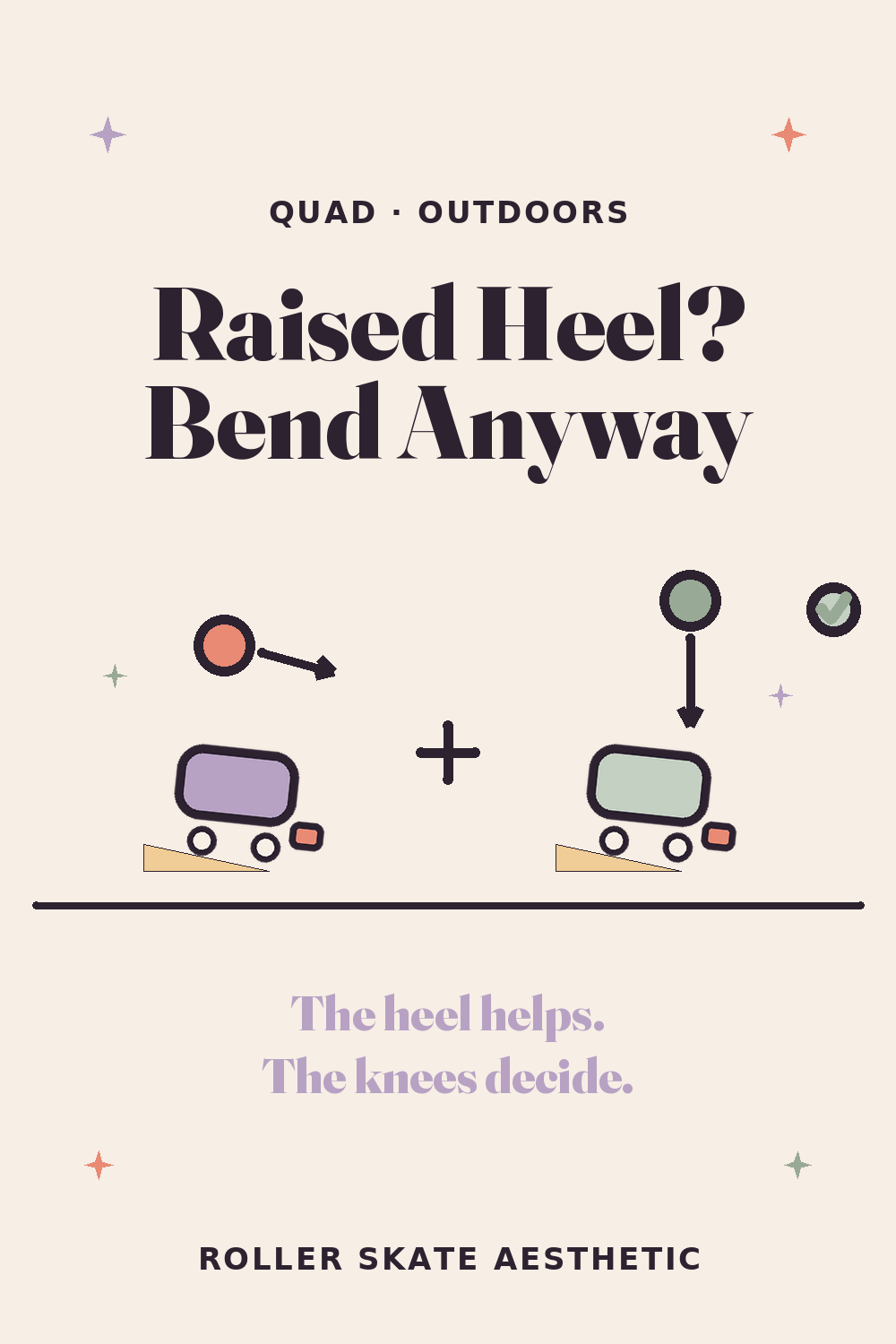
Most classic quad boots have a slightly raised heel, which pushes your weight forward onto the balls of your feet by itself. A certified coach counts it as an advantage, with one condition: the knee bend is still crucial. Outdoors, where a crack can pitch you back, the raised heel helps but never replaces bent knees. Technique from ICP-certified coach Asha Kirkby.
Look at a classic quad boot from the side and the heel sits higher than the toe. That is not a fashion detail, and a certified coach counts it as one of the quad's advantages, with a condition attached.
Most classic quad boots have a slightly raised heel, which pushes your weight forward onto the balls of your feet by itself. Before you have done anything, the boot has tilted you a little towards the front of the skate, which is where the previous page said the weight needs to be.
The condition: the knee bend is still crucial. The heel gives you a head start of a few degrees. It does not lower your centre of gravity, it does not absorb a jolt, and it does not keep the weight forward once the knees straighten. Only bent knees do those things, on quads as on inline skates.
Outdoors, this matters more than on a rink. A crack that catches the front wheels pitches you back; a raised heel helps a little and bent knees help a lot, and the skater who relies on the heel alone is upright by the second bump. The heel is a gift; the bend is the work.
Technique from Asha Kirkby of Skatefresh, an instructor certified by the Inline Certification Program who also teaches quad skating. This page is about QUAD skates outdoors: it comes from her comparison of quad and inline skates, and the site's own skater does not practise quads, so nothing here is vouched for by her.
Keep going: this is one section of the full Roller Skating for Beginners guide — sizing, gear, stopping, and where to skate, in one page. Free, no sign-up, nothing to buy.