Beginner roller skating
A Rocker Is a Style, Not a Requirement
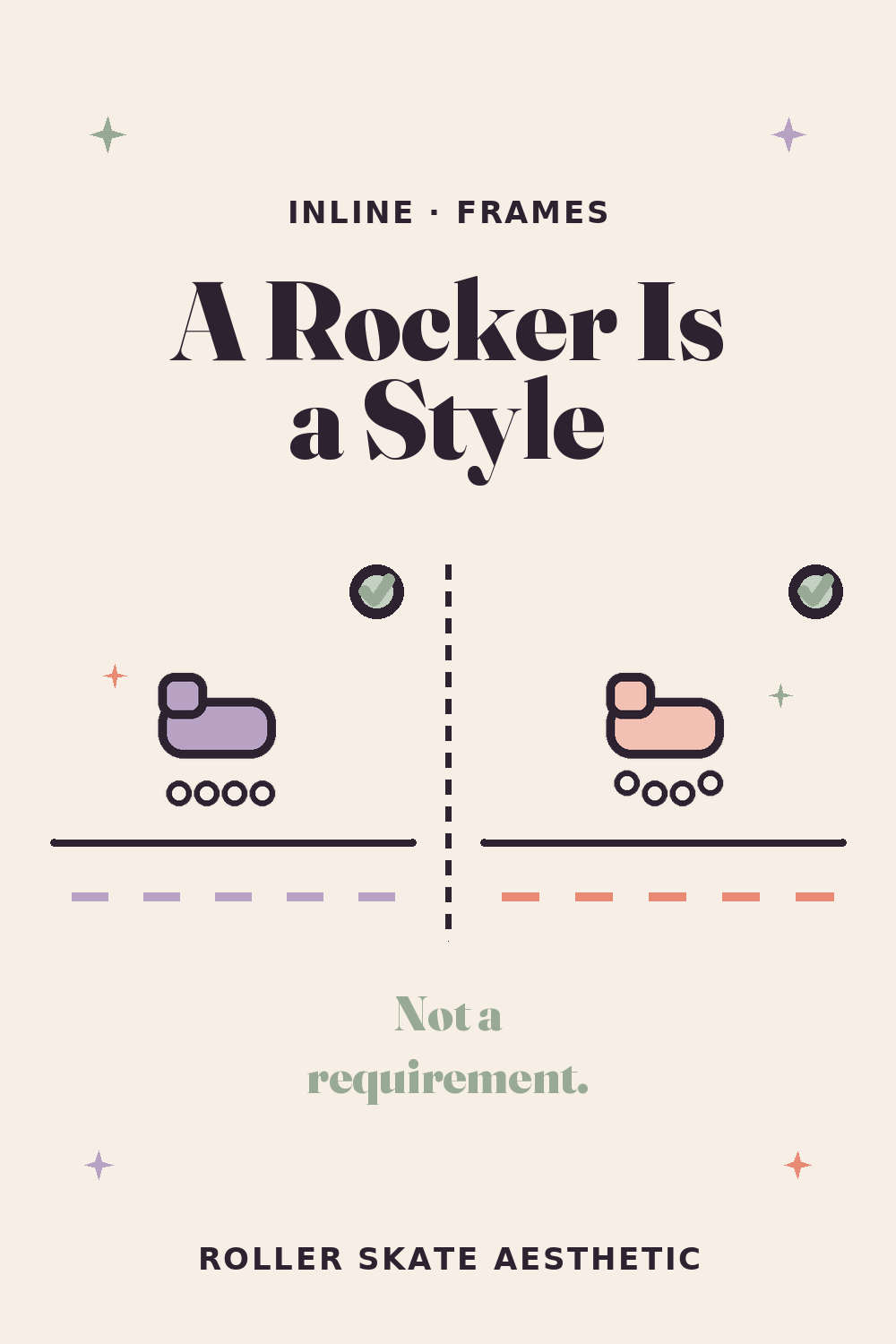
Flat setup or rockered? A certified coach on wizard-style transitions: both work, differently. On a flat setup you flip the skate; on a rockered one you cusp, rolling through the curve. The rocker makes cusping easier and gives that swishy look, but it is not essential. Pick the frame for how you want to skate, not out of obligation. Technique from ICP-certified coach Asha Kirkby.
Flat setup or rockered? On a flat frame all the wheels touch the ground; on a rockered one the middle wheels sit lower, so the skate rolls on a curve and pivots more easily. A certified coach was asked whether wizard-style skating is even possible without a rocker, and her answer is useful well beyond wizard skating.
Both work, with different technique. For the flowing two-footed transitions of that style she separates flipping from cusping: on a flat setup you flip the skate through the turn; on a rockered one you cusp, rolling through the curve on the lowered wheels.
The rocker makes cusping easier and gives that distinctive swishy look, but it is not essential. That is the whole answer to the question in the title: a rocker is a style choice, not a requirement to skate a certain way.
This site already carries her other line on the subject: a rockered frame helps with curves, it does not create them. Pick the frame for how you want to skate, not because you think you must.
Technique from Asha Kirkby of Skatefresh, an instructor certified by the Inline Certification Program. She teaches inline skating, and that is the discipline this page is about. Nothing on this page is for sale: no brand is recommended and no link leads to a shop.
Keep going: this is one section of the full Roller Skating for Beginners guide — sizing, gear, stopping, and where to skate, in one page. Free, no sign-up, nothing to buy.