Beginner roller skating
An Edge Is the Whole Leg, Not the Ankle
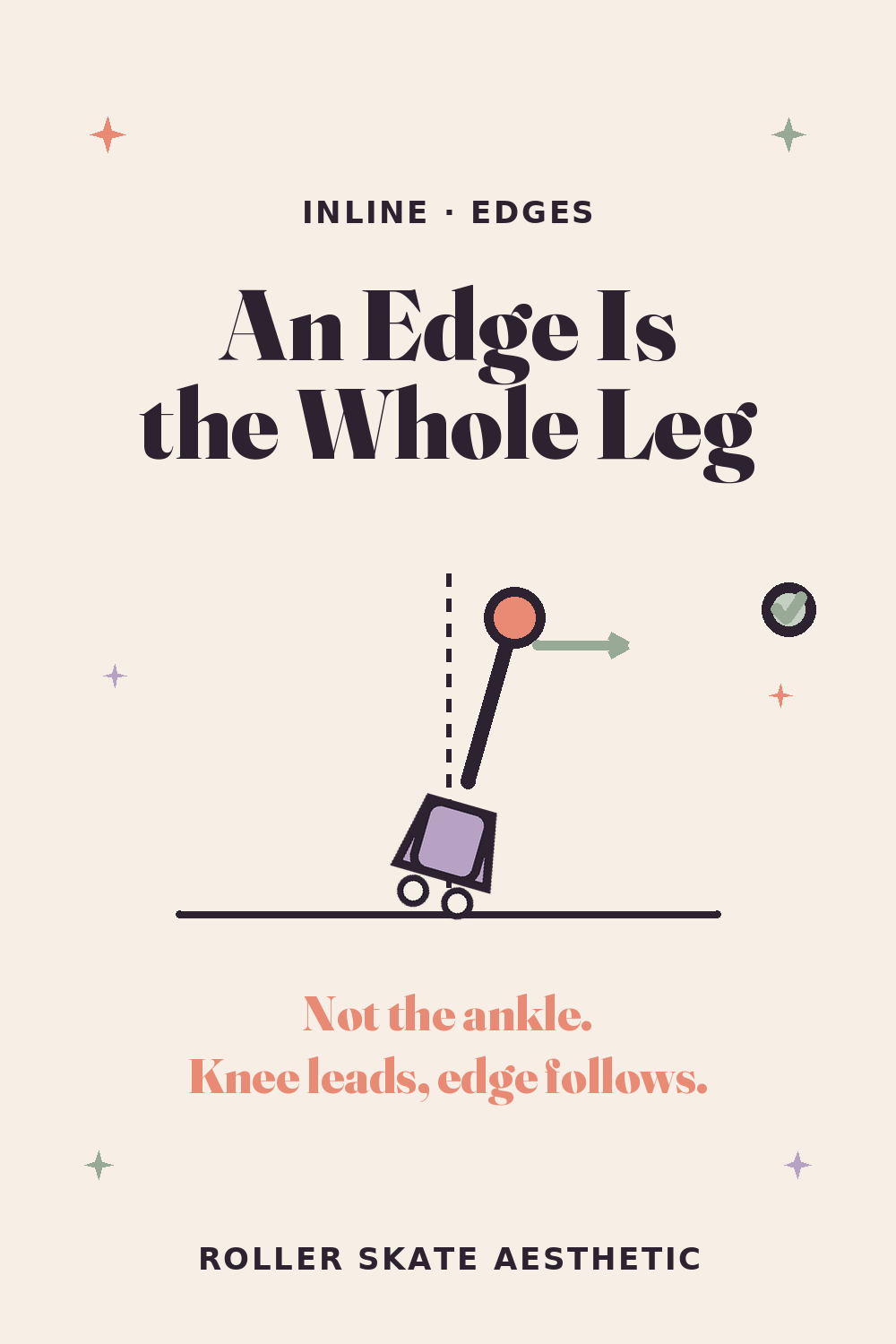
An inline boot is a rigid shell that holds the ankle still, and the wheels become the extension of the leg. So there is no joint down there to make an edge with: the whole leg leans, knees bent, weight over the wheels. ICP-certified coach Asha Kirkby corrects edges the same way: at the knee, driven forward over the toes, never lower down. Where the knee goes, the edge follows.
Ask a beginner to "get on an edge" and they look down at their feet, as if the edge were a small movement made somewhere near the boot. On an inline skate it cannot be.
An inline boot is a rigid shell. It holds the ankle still on purpose, and the wheels become the extension of the leg. There is no free joint down there to make an edge with. That is the same fact that makes inline skates stable, seen from a different side: what you gain in stability you pay for in where the edge has to come from.
So an edge is the whole leg leaning, knees bent, weight over the wheels. Tilt the leg from the hip and knee and the skate tilts with it, because it is bolted to the leg; try to make the movement lower down and nothing happens except a wobble.
A certified coach corrects edges in exactly that place: at the knee. Her cue for a skate that tips inward is to drive the knee forward over the toes, towards the outer side of the foot, never to do anything at the boot. Where the knee goes, the edge follows, and the rest of this series is about where to send it.
The rigid-shell fact at the top of this page is the site's own skater's, who skates inline. The knee-level correction is from Asha Kirkby of Skatefresh, an instructor certified by the Inline Certification Program; she teaches inline skating, and that is the discipline this page is about.
Keep going: this is one section of the full Roller Skating for Beginners guide — sizing, gear, stopping, and where to skate, in one page. Free, no sign-up, nothing to buy.