Beginner roller skating
Both Feet on the Ground Before One in the Air
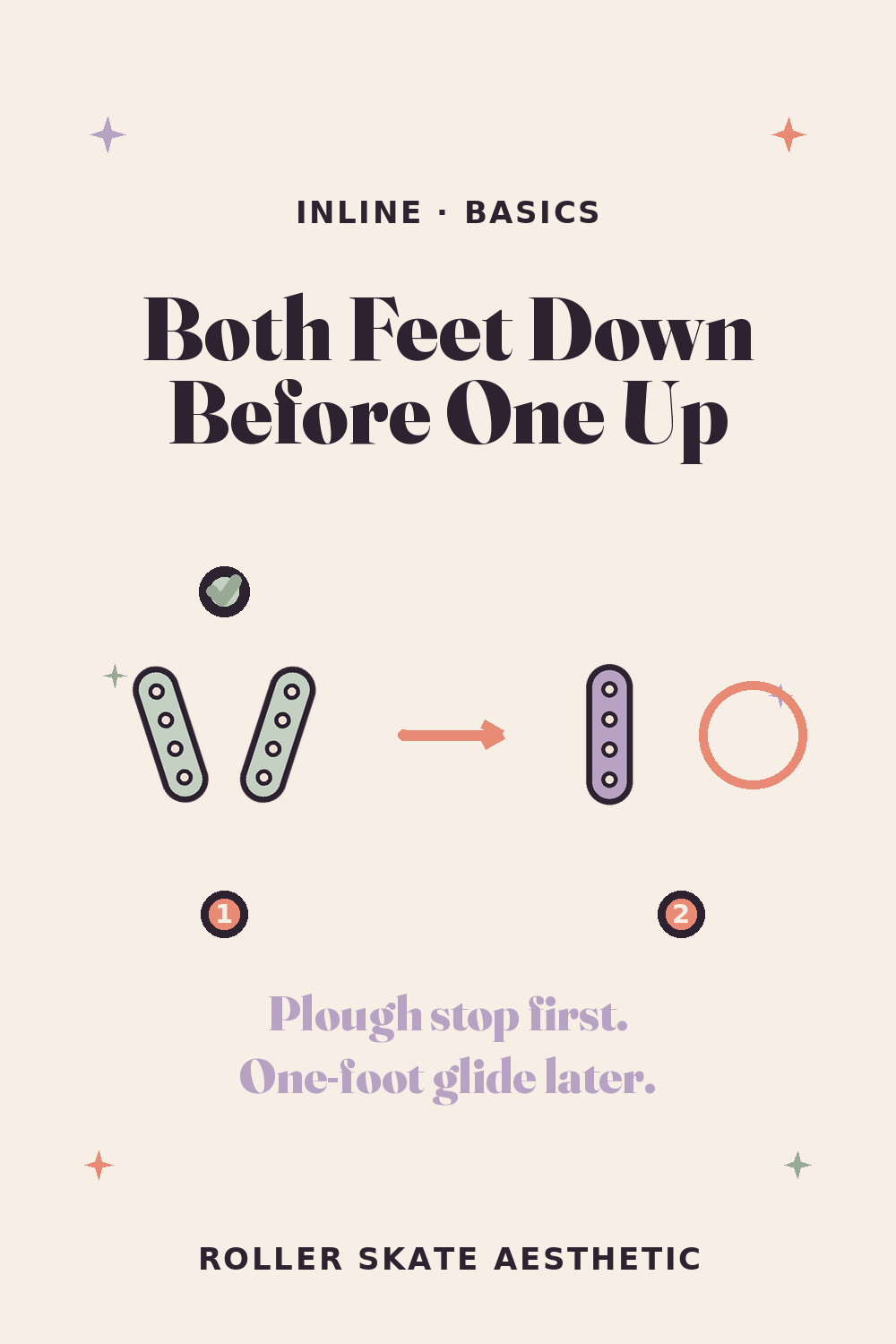
The plough stop is taught first for one precise reason: both feet stay on the ground, and no one-leg balance is asked of you. That is why a one-foot glide cannot be a second-session move. The single-leg balance and edging drills ICP-certified coach Asha Kirkby sets are edge work for skaters who already roll: they come after the two-footed basics, never instead of them.
This site has said before that the plough stop is the first stop to learn. The reason is precise, and it says something about balance that goes beyond stopping.
The plough stop is taught first because both feet stay on the ground, and no one-leg balance is asked of you. Everything about it can be done with the weight shared between two skates; nothing in it requires you to trust one.
That is exactly why a one-foot glide cannot be a second-session move. Marching, the duck walk, the two-footed glide, the plough: each of those keeps both skates down. Lifting one is a different problem, and it comes after the two-footed basics are automatic, not alongside them.
The single-leg balance and edging drills a certified coach sets are edge work for skaters who already roll. She gives them to people correcting their edges over distance, not to people finding their feet. They sit after the two-footed basics in her order as in this site's, never instead of them.
The two-feet-first order is the site's own skater's, who skates inline. The single-leg drills are from Asha Kirkby of Skatefresh, an instructor certified by the Inline Certification Program; she teaches inline skating, and that is the discipline this page is about.
Keep going: this is one section of the full Roller Skating for Beginners guide — sizing, gear, stopping, and where to skate, in one page. Free, no sign-up, nothing to buy.