Beginner roller skating
Long-Distance Foot Cramps Start at the Edge, Not the Boot
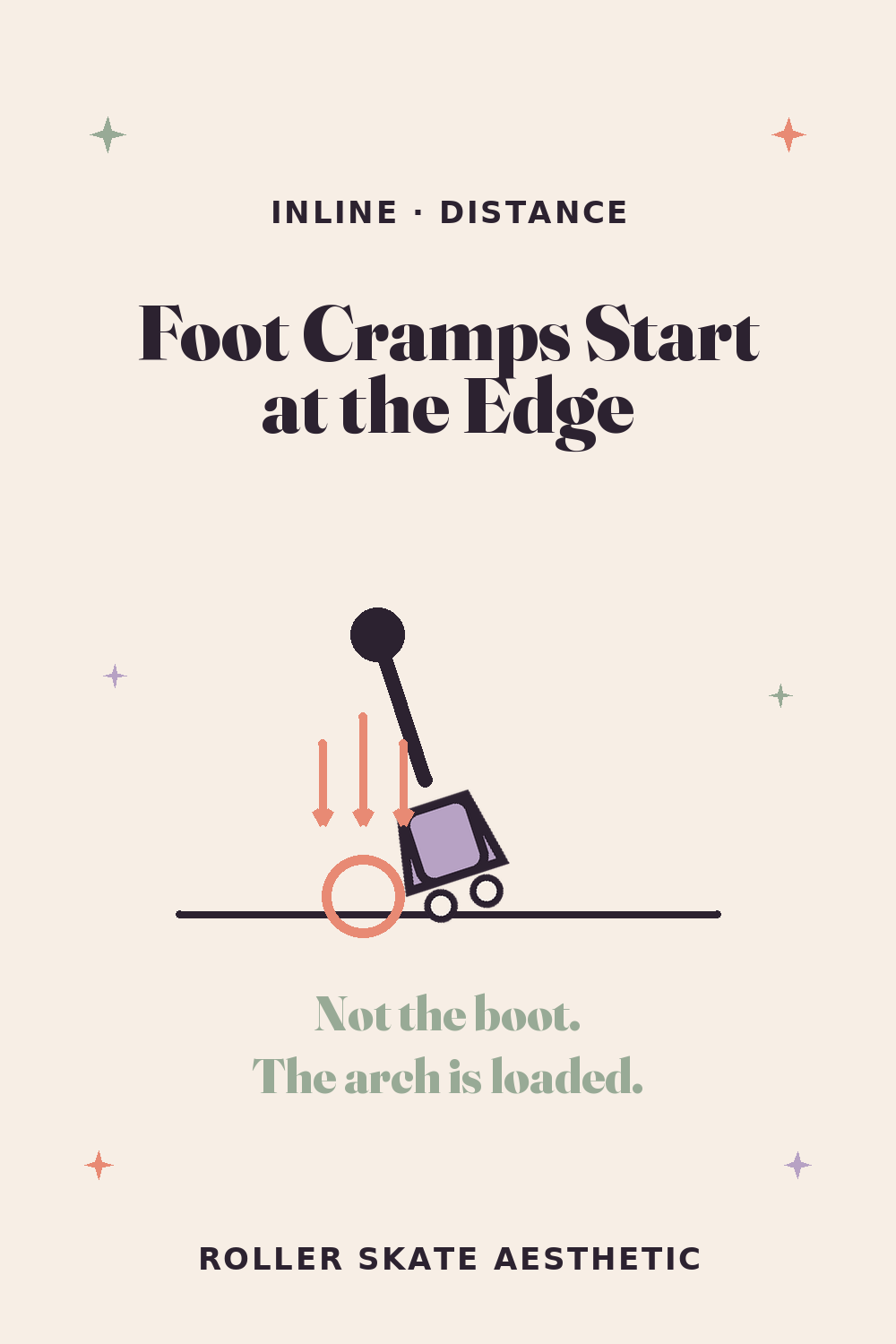
Feet that cramp twenty minutes into a long skate are usually reporting an edge. ICP-certified coach Asha Kirkby explains the mechanism: a skate tipped onto its inside edge loads the arch, the foot muscles grip the footbed to hold the weight steady, and the sharp cramps follow within fifteen to thirty minutes. The grip is the effect; the edge is where it comes from.
Feet that cramp twenty minutes into a long skate are usually reporting an edge, not a boot. A certified coach explains the mechanism to a distance skater, and it runs through the whole leg.
A skate tipped onto its inside edge loads the arch of the foot. The weight that should sit over the middle of the skate is pressing down on the inner side instead, and the arch is what is underneath it.
The foot muscles answer by gripping the footbed, to hold the weight steady. That grip is continuous, it is unconscious, and it is exactly the tension this site has described before as something you leave in your feet. Held long enough, it becomes a sharp cramp — within fifteen to thirty minutes of distance skating, in the coach's experience.
The grip is the effect; the edge is where it comes from. Loosening the boot or changing the insole treats the place where it hurts. Getting the skate back onto its centre edge removes the reason the foot was gripping, and the next page says how.
Technique from Asha Kirkby of Skatefresh, an instructor certified by the Inline Certification Program. She teaches inline skating, and that is the discipline this page is about.
Keep going: this is one section of the full Roller Skating for Beginners guide — sizing, gear, stopping, and where to skate, in one page. Free, no sign-up, nothing to buy.