Beginner roller skating
Downhill Plough: Your Knees Must Cover Your Toes
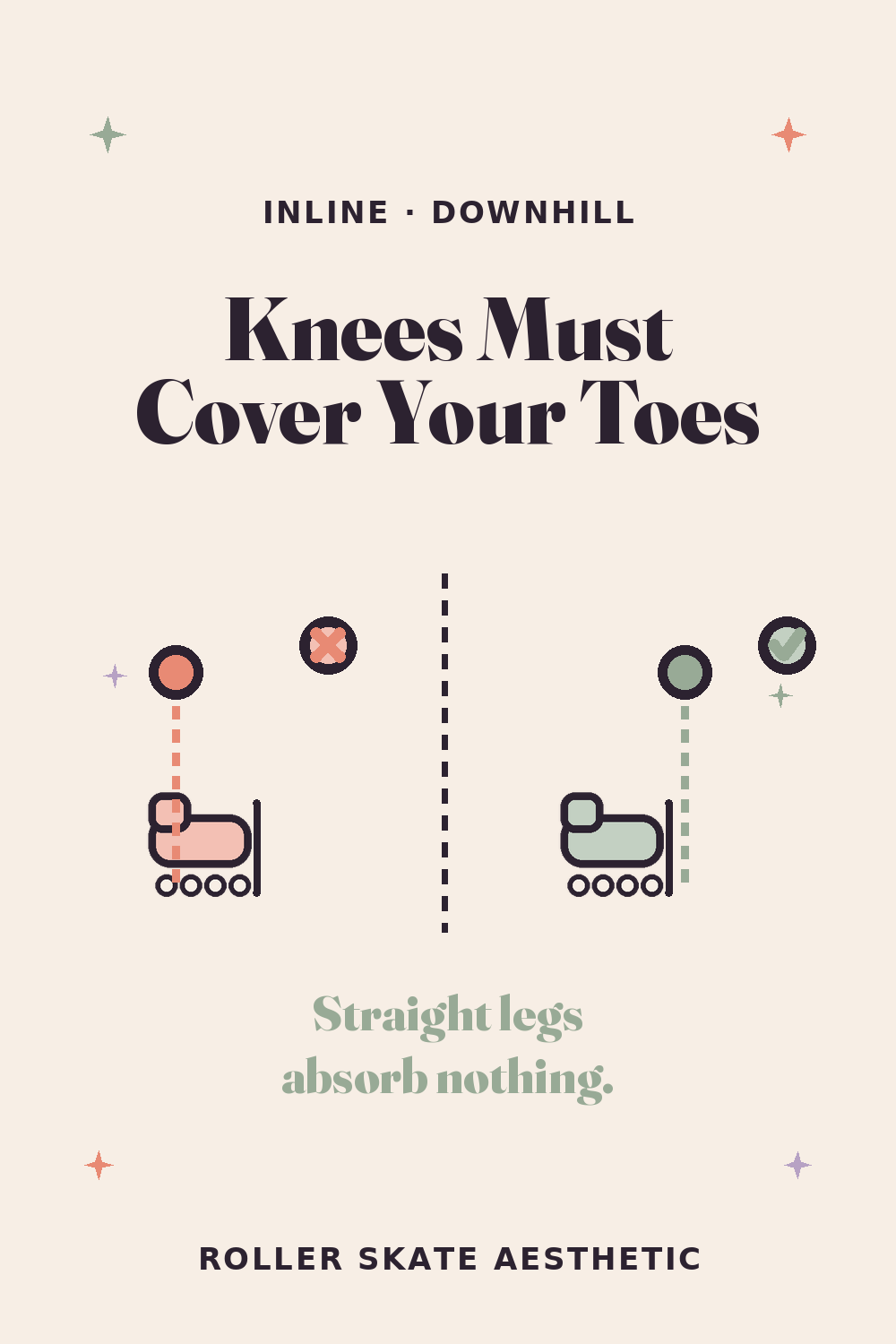
A student's plough looked right on a real slope and scrubbed no speed at all. The fault was knee bend: from a side view her kneecaps did not cover her toes. Bend until they do, and your legs become shock absorbers that press the edges into the road and take speed out at every step. Straight legs cannot absorb a gradient. A hill I doubt I can stop on, I ride it out — Cass. From ICP-certified coach Asha Kirkby.
A coach filmed a student doing a stepping plough down a real slope. The movement looked correct the whole way and scrubbed off almost no speed at all. That combination — right shape, no result — is worth understanding, because it is extremely common.
The first fault was knee bend. Seen from the side, her kneecaps did not cover her toes. Legs that straight cannot absorb the momentum a gradient keeps adding, and they cannot press anything into the road.
Bend until the kneecaps cover the toes from a side profile. That is a check anyone can make on a phone video, and it is the difference between legs that ride the hill and legs that act as shock absorbers pressing the edges into the pavement.
Every step then takes speed out. With enough flexion, each footfall loads an edge instead of just touching down — which is why a deeper plough on a hill feels like work and a shallow one feels like nothing at all.
One thing sits above all of this, and it is mine rather than hers: a hill I doubt I can stop on, I ride it out rather than brake. Trying to brake halfway down a gradient you have already misjudged is worse than riding it to the flat — Cass, a non-professional street skater.
Technique from Asha Kirkby of Skatefresh, an instructor certified by the Inline Certification Program. She teaches inline skating, and that is the discipline this page is about.
Keep going: this is one section of the full Roller Skating for Beginners guide — sizing, gear, stopping, and where to skate, in one page. Free, no sign-up, nothing to buy.