Beginner roller skating
Downhill T-Stop: 80% of You on the Front Leg
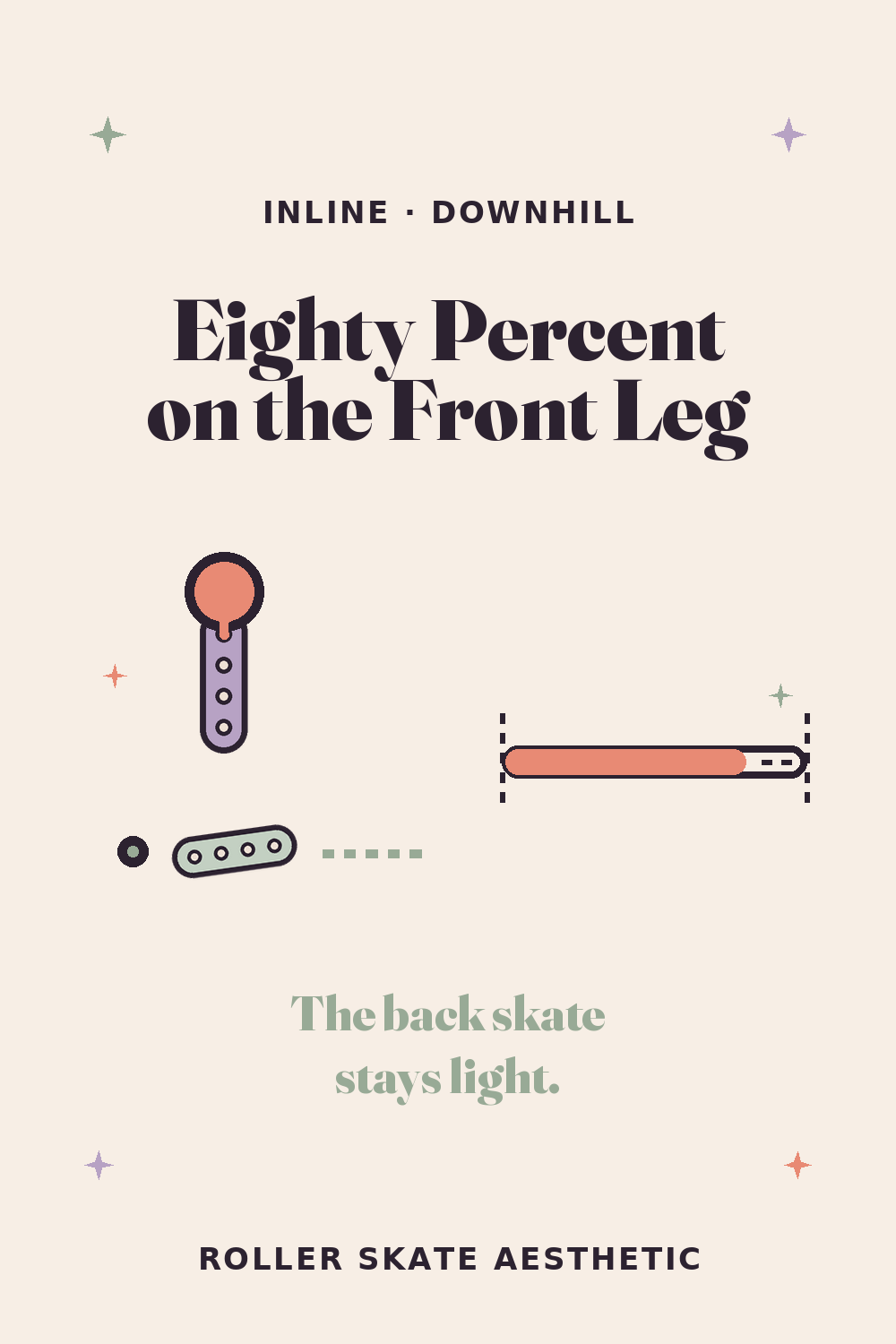
A certified coach's downhill T-stop, by weight: 80% or more on the front supporting leg, that knee deeply bent, riding a centre edge. The back skate stays light and narrow and drags behind you to control speed — it is not where your weight lives. Finish by pulling the back foot firmly in while the front knee sinks deeper. Steeper than that, I ride it out — Cass. From ICP-certified coach Asha Kirkby.
The T-stop is the stop most self-taught skaters end up with, mine included, and it is usually learned by feel rather than by numbers. On a hill the numbers start to matter.
Eighty percent or more of your weight belongs on the front supporting leg, with that knee deeply bent and the skate riding a centre edge — neither rolling inward nor outward.
The back skate stays light. It drags behind you in a narrow stance to control speed; it is not where your weight lives. A back skate carrying real load is what spins people out, and a gradient makes that more likely, not less.
Finish by pulling the back foot firmly in while the front knee sinks deeper. That last inward pull is what turns a long fade into an actual stop, and it is the part that gets dropped when the leg is tired.
One thing sits above all of this, and it is mine rather than hers: a hill I doubt I can stop on, I ride it out rather than brake. Trying to brake halfway down a gradient you have already misjudged is worse than riding it to the flat — Cass, a non-professional street skater.
Technique from Asha Kirkby of Skatefresh, an instructor certified by the Inline Certification Program. She teaches inline skating, and that is the discipline this page is about.
Keep going: this is one section of the full Roller Skating for Beginners guide — sizing, gear, stopping, and where to skate, in one page. Free, no sign-up, nothing to buy.