Beginner roller skating
Frame Shifts Come After Edge Control, Not Before
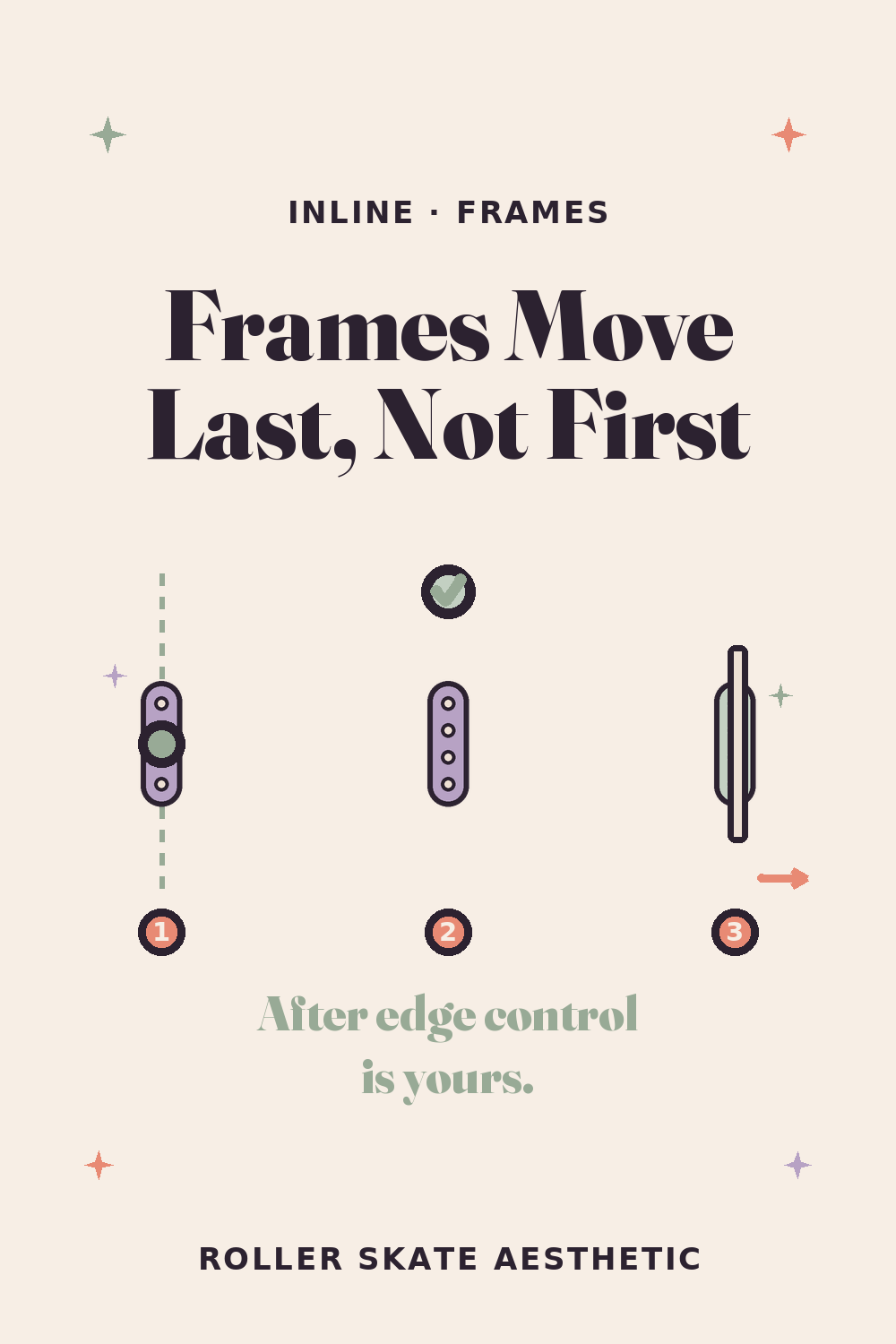
The right time to move your frames is late. A certified coach only shifts them once a skater has conscious edge control and corrected posture errors. Who then benefits: skaters with an unusual natural stance, such as pigeon toes, or those on tall setups with very big wheels. Everyone else leaves the frame where the factory put it. Technique from ICP-certified coach Asha Kirkby.
There is a right time to move your frames, and a certified coach places it late in the process.
Only shift your frames after you have mastered conscious edge control and corrected your posture errors. Before that, any frame position will be fought by knees that drift and ankles that collapse, and you will not be able to tell whether the shift helped, hurt, or did nothing.
Who benefits once that stage is reached, in her words: skaters with unique standing or skating habits, a naturally pigeon-toed stance for example, and skaters on high-centre setups with very big wheels. For them a subtle shift can suit the body better than the factory position.
For everyone else the frame is fine where the factory put it. The coach's own point is that moving frames is personal: a change that suits one skater's stance is not a recommendation for anyone else's.
Technique from Asha Kirkby of Skatefresh, an instructor certified by the Inline Certification Program. She teaches inline skating, and that is the discipline this page is about. Nothing on this page is for sale: no brand is recommended and no link leads to a shop.
Keep going: this is one section of the full Roller Skating for Beginners guide — sizing, gear, stopping, and where to skate, in one page. Free, no sign-up, nothing to buy.