Beginner roller skating
Heel Brake: 3 Real Mistakes, Coached and Fixed
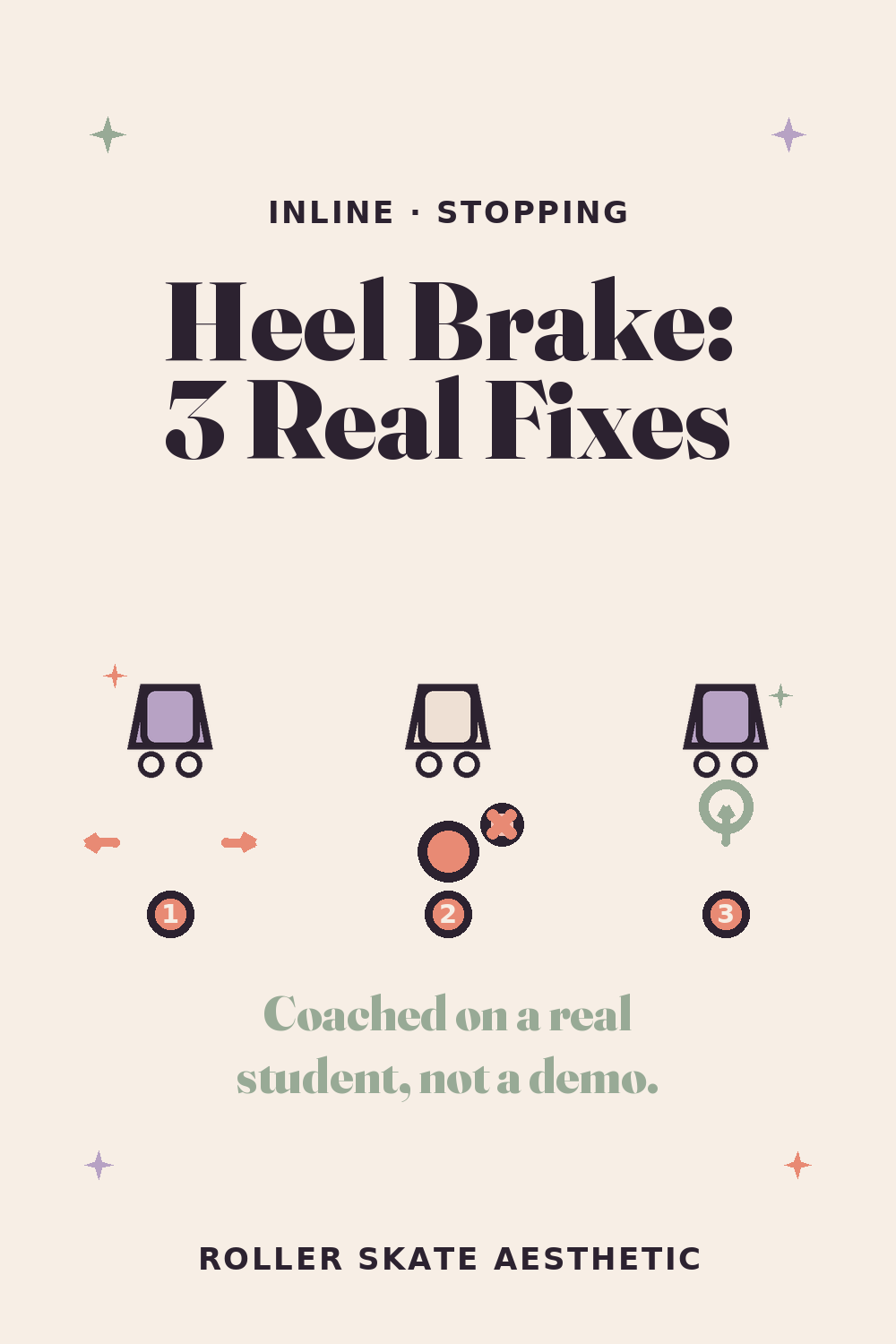
A certified coach reviewed a real student's heel brake and found three fixable mistakes. Too-short scissor stance? Push the braking foot further forward. Slamming all your weight down? Keep 70% on your back leg, 30% on the brake, for a smooth slide. Straightening your back knee? Keep it bent, hips over your heel. (I'm not fully sold on this brake long-term — see my other post. Here's how to use it well meanwhile.) Technique from ICP-certified coach Asha Kirkby.
Most heel brake tutorials show a demonstration on someone who already has it down. This one is different: a certified coach reviewing a real student's attempt, mistakes included, which is a more useful thing to watch than a clean example.
Mistake one — a scissor stance so short it sits next to the back wheel. The fix is to push the braking foot further forward, until it lands in front of your back skate's front wheel rather than beside it.
Mistake two — all the weight slammed down at once. That produces the loud, jarring stop people associate with this brake. Keep roughly 70% of your weight on your back support leg and only 30% on the braking foot, for a slide that slows you down instead of a stop that lurches.
Mistake three — the back knee straightening and the hips sliding backwards. Keep that knee bent and your hips stacked over your heel; a locked knee is what makes the stop feel like it is about to tip you over.
I am not fully sold on keeping the heel brake for the long term myself — see our companion page on that debate — but while you are using it, this is the version that actually works. Inline technique, from Asha Kirkby of Skatefresh, an instructor certified by the Inline Certification Program. She teaches inline skating, and that is the discipline this page is about.
Keep going: this is one section of the full Roller Skating for Beginners guide — sizing, gear, stopping, and where to skate, in one page. Free, no sign-up, nothing to buy.