Beginner roller skating
Hips Pushed Back Show Up as Tense, Scrunched Feet
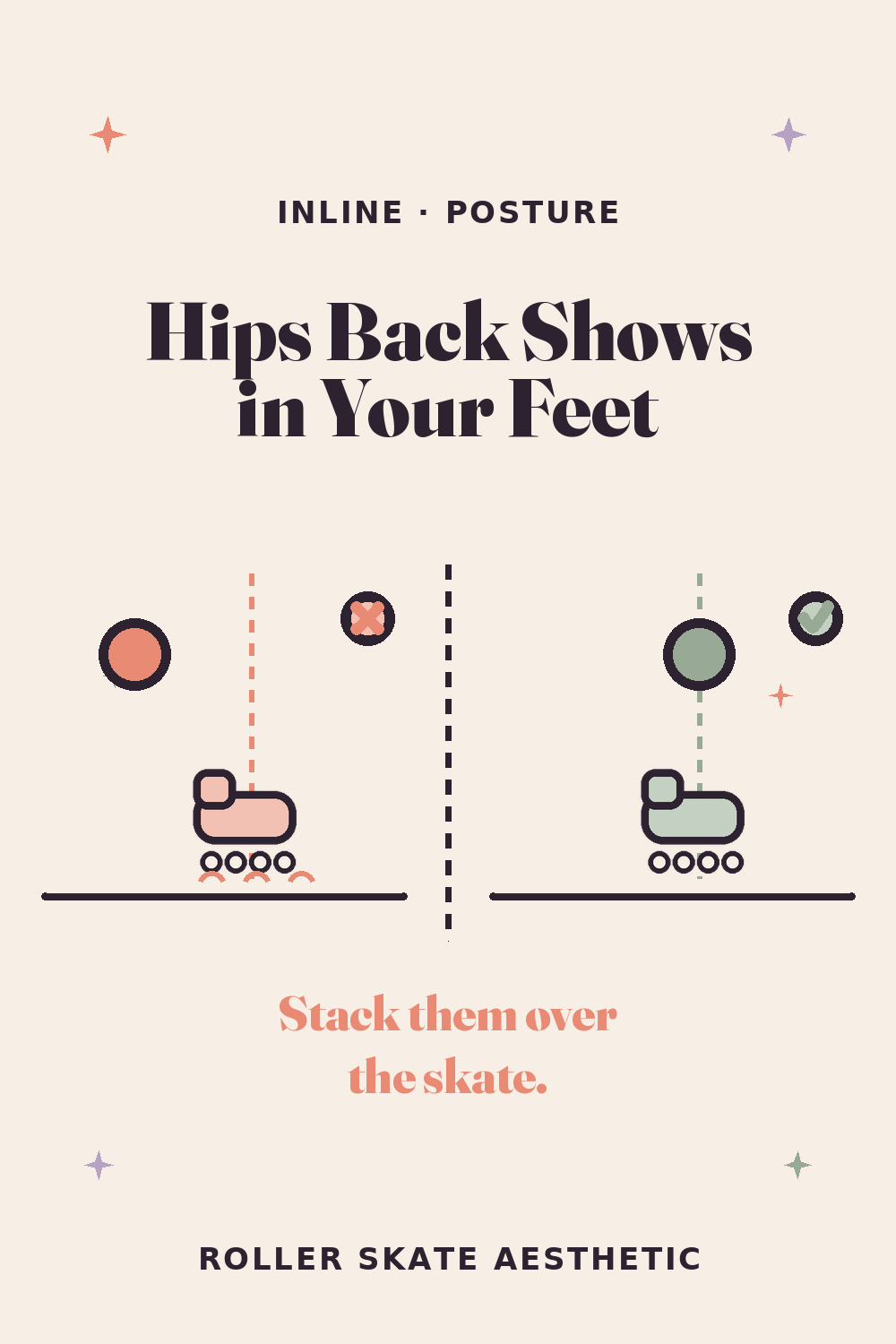
Sticking your bottom out behind you feels safe and costs you twice: a certified coach names it among the three beginner faults — it creates lower back strain and scrunched-up, tense feet. The correction: shoulders stacked over the hips, shins bent forward until the kneecaps cover the toes, weight on the front half of the feet, toes relaxed rather than gripping. Technique from ICP-certified coach Asha Kirkby.
Sticking your bottom out behind you feels safe. It puts your weight back, which feels like the opposite of falling forward, and it is one of the three beginner faults a certified coach sees most.
It costs you twice: lower back strain, and scrunched-up, tense feet. With the hips pushed back, the toes grip the inside of the boot to stop you tipping, and they stay gripped for the whole session. The feet that hurt afterwards were clenched for an hour.
The correction: shoulders stacked directly over the hips, shins bent forward until the kneecaps cover the toes. Body up, knees down — the weight lands on the front half of the feet by itself, and the toes can relax rather than grip.
The feeling in the feet is the test. If your toes are working, your hips are somewhere behind you. Stack them over the skate and the feet go quiet.
Technique from Asha Kirkby of Skatefresh, an instructor certified by the Inline Certification Program. She teaches inline skating, and that is the discipline this page is about.
Keep going: this is one section of the full Roller Skating for Beginners guide — sizing, gear, stopping, and where to skate, in one page. Free, no sign-up, nothing to buy.