Beginner roller skating
If Your Sliding Skate Grips, It Is Carrying Too Much
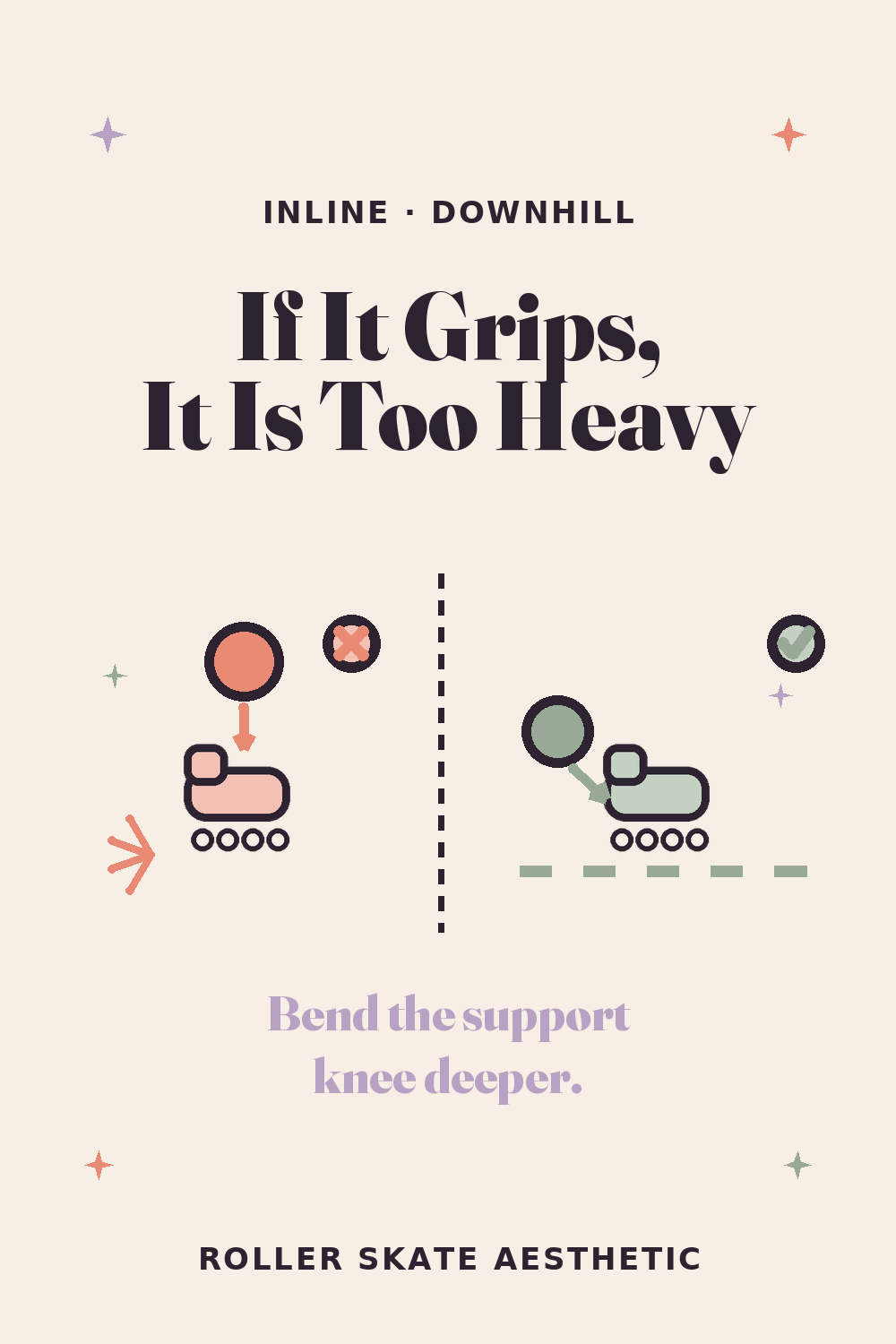
The powerslide, then its one diagnostic. Start in a scissor, transition backward, slide the front leg out in front of you, and lower your chest toward your thighs so all your weight moves onto the support leg. If the sliding skate grips instead of sliding, it is too heavy: the fix is not the sliding foot, it is bending the support knee deeper. Beyond that, I ride it out — Cass. From ICP-certified coach Asha Kirkby.
The powerslide, in the order a certified coach teaches it, and then the one diagnostic that explains almost every failed attempt.
The movement: start in a scissor, transition backward, and slide the front leg out extended in front of you. Lower your chest and stomach down toward your thighs — that is what moves all of your body weight onto the support leg.
The diagnostic: if the sliding skate catches and grips instead of sliding, it is too heavy. It is carrying weight it should not have.
The fix is not in the sliding foot. It is in the support knee, which needs to bend deeper. People instinctively try to lighten the sliding leg by lifting it, which changes the edge and makes the grip worse; sinking the other side is what actually unloads it.
One thing sits above all of this, and it is mine rather than hers: a hill I doubt I can stop on, I ride it out rather than brake. Trying to brake halfway down a gradient you have already misjudged is worse than riding it to the flat — Cass, a non-professional street skater.
Technique from Asha Kirkby of Skatefresh, an instructor certified by the Inline Certification Program. She teaches inline skating, and that is the discipline this page is about.
Keep going: this is one section of the full Roller Skating for Beginners guide — sizing, gear, stopping, and where to skate, in one page. Free, no sign-up, nothing to buy.