Beginner roller skating
Knowing You Need an Outside Edge Is Not Being Able to Hold One
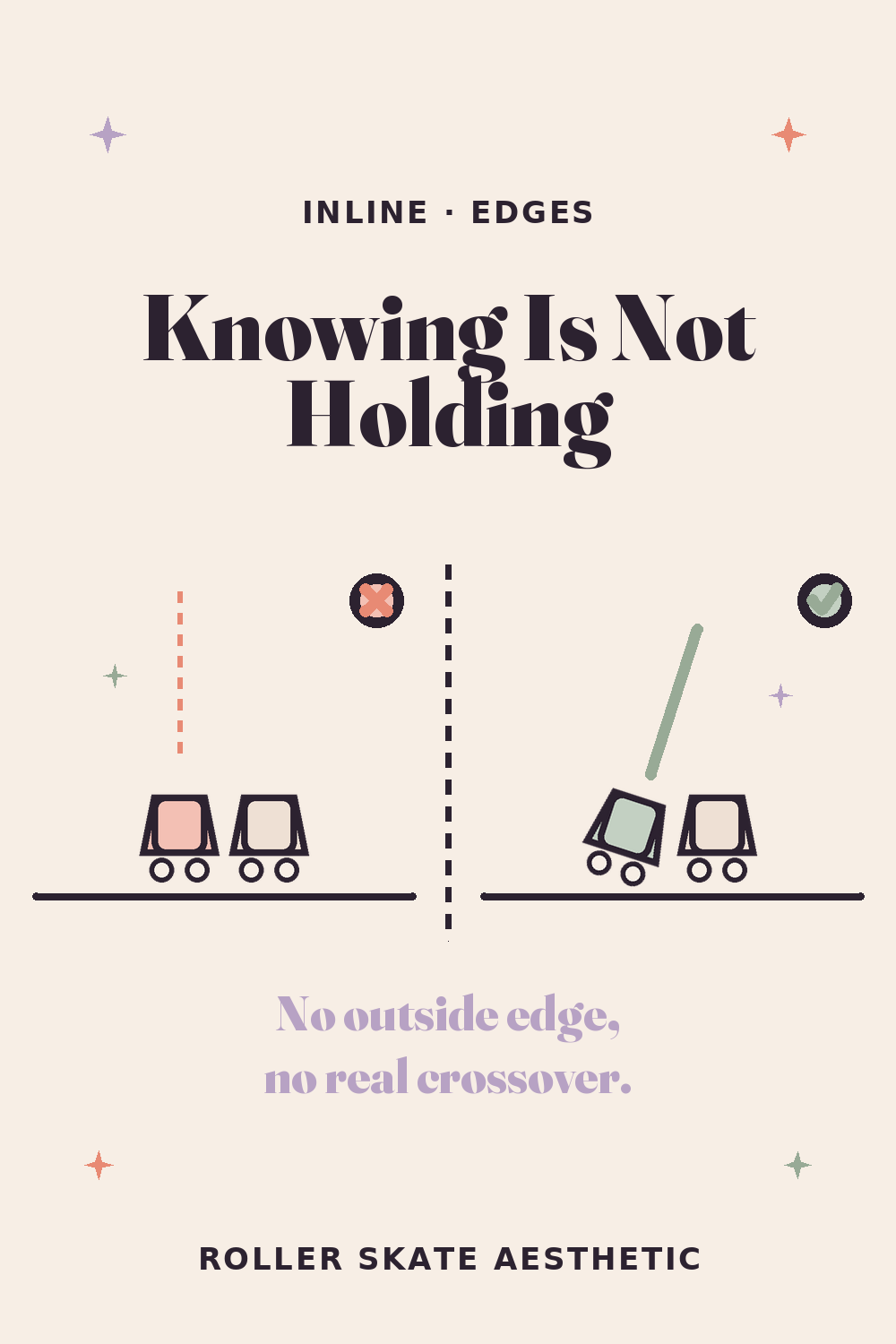
The outside edge is the door to intermediate skating, says ICP-certified coach Asha Kirkby, and here is the trap: skaters attack intermediate moves, the forward crossover first of all, before they can hold one. The crossover then happens on a centre edge, which is not a crossover. Knowing the edge is required is not the same skill as producing it on demand.
There is a stage where a skater has read enough to know the words. They know a crossover is done on the outside edge of the inside skate. They can explain it. And then they go and do the crossover on a centre edge, because knowing is not the same as having.
A certified coach calls the outside edge the door to intermediate skating, and names the trap. Skaters attack intermediate moves — the forward crossover first of all — before they can hold an outside edge on its own. The move then gets built on whatever edge the skater does have, which is the centre edge.
A crossover on a centre edge is not a crossover. The skates cross, the legs go through the shape, but nothing carves: the skater is stepping around the corner rather than leaning through it, and every step is a small balance problem instead of a push.
The order, then, is edge first and move second. Being able to say "this needs an outside edge" is a fact you have learned; being able to roll on one, on demand, on either skate, is a skill you have to build separately, and the moves that need it will wait.
Technique from Asha Kirkby of Skatefresh, an instructor certified by the Inline Certification Program. She teaches inline skating, and that is the discipline this page is about.
Keep going: this is one section of the full Roller Skating for Beginners guide — sizing, gear, stopping, and where to skate, in one page. Free, no sign-up, nothing to buy.