Beginner roller skating
The Turning Stop Every Quad Skater Should Learn First
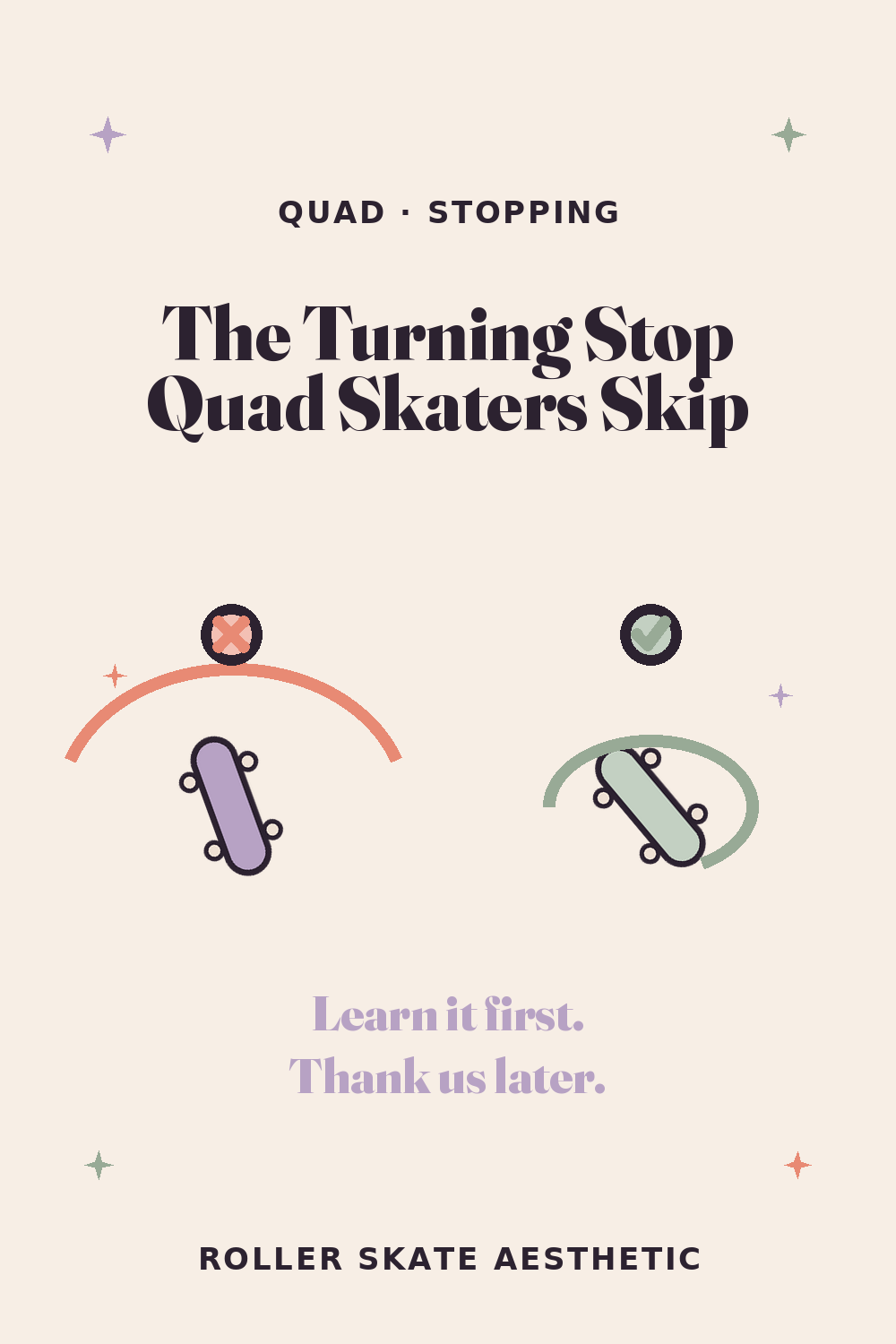
The lunge stop is the prerequisite for two flashier moves — the powerstop and the lunge entry into a powerslide — reason enough to learn it well. Often confused with the easier parallel turn, a different technique. The goal: tighten your turn to roughly a one-metre diameter, which is what stops you. Quad skate technique from Asha Kirkby, a champion figure skater who represented Great Britain internationally and now teaches through Skatefresh.
The lunge stop does not look like much on its own, which is exactly why quad skaters skip it and go straight for flashier moves. That is a mistake, because it is the prerequisite for both of them.
It sets up two more advanced moves: the powerstop, and the lunge entry into a powerslide. Learning the lunge stop properly first is what makes both of those reachable later, rather than something you fight your way through separately.
The confusion that trips people up: the lunge stop is often mixed up with the parallel turn, which is the easier move and not the same technique at all. If your "lunge stop" feels easy, you may be doing a parallel turn instead.
The actual goal is a number, not a feeling: tighten your turn down to roughly a one-metre diameter. That tightness is what brings you to a stop — a wide, lazy turn will not do it no matter how it looks.
Quad skate technique from Asha Kirkby, a champion figure skater who represented Great Britain internationally and now teaches inline skating through Skatefresh.
Keep going: this is one section of the full Roller Skating for Beginners guide — sizing, gear, stopping, and where to skate, in one page. Free, no sign-up, nothing to buy.