Beginner roller skating
On Skates the Ankle Carries. Off Skates, It Moves
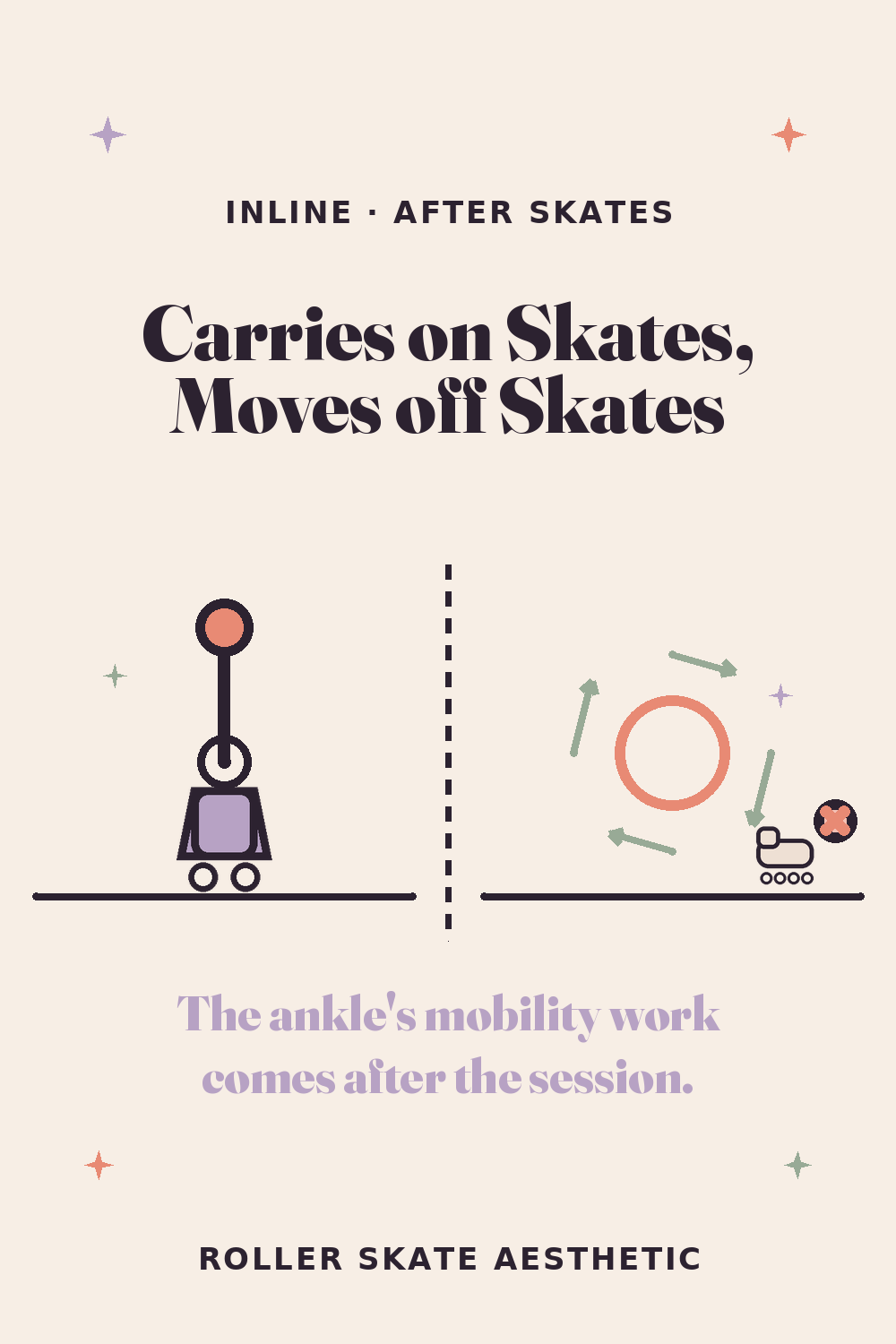
An inline boot is a rigid shell that holds the ankle still: on the wheels its job is to carry, which is what the first marching steps teach it. Mobility for the feet and ankles therefore lives off the skates, and ICP-certified coach Asha Kirkby places it at the end: her foot and ankle movements work best done after the session, once the boots come off.
This site keeps coming back to one fact about inline skates: the boot is a rigid shell that holds the ankle still. It matters for stability, for edges, and, it turns out, for planning a session.
On the wheels, the ankle's job is to carry. That is what the very first marching steps teach it, and the boot is laced firmly so that it can do that job without being asked to do anything else.
Mobility for the feet and ankles therefore lives off the skates. There is no room for it inside a boot that is doing its work, and no reason to want it there.
A certified coach places it at the end. Her foot and ankle movements work best, in her words, done after the session, once the boots come off and the joints are free to move again. Carry on the wheels; move on the floor afterwards.
The rigid-shell fact at the top of this page is the site's own skater's, who skates inline. The after-session foot and ankle work is from Asha Kirkby of Skatefresh, an instructor certified by the Inline Certification Program; she teaches inline skating, and that is the discipline this page is about.
Keep going: this is one section of the full Roller Skating for Beginners guide — sizing, gear, stopping, and where to skate, in one page. Free, no sign-up, nothing to buy.