Beginner roller skating
One Leg, Locked Knee, a Minute Each Side, Off the Skates
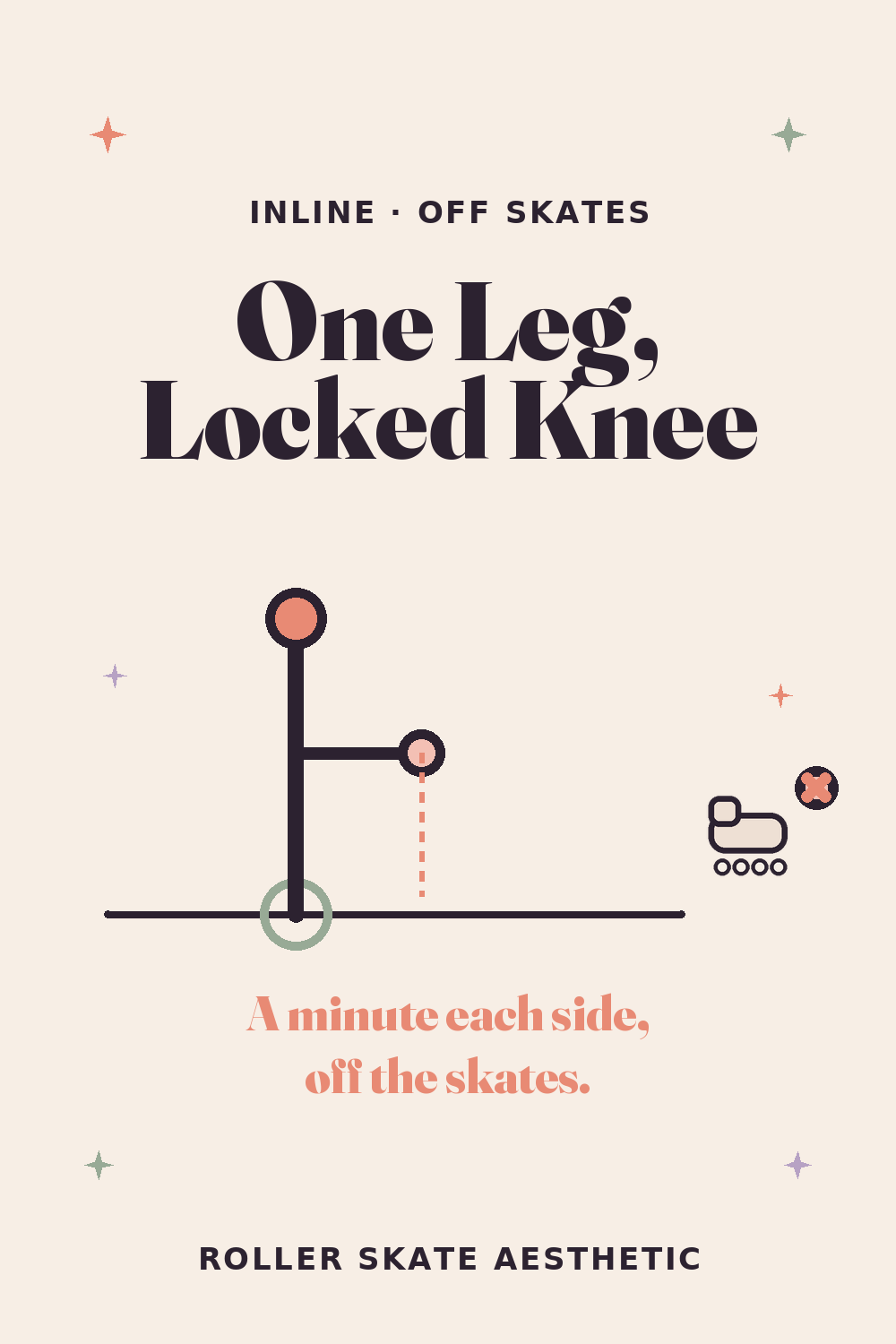
Inline skating is done with bent knees, so the thigh almost never works fully straight. ICP-certified coach Asha Kirkby balances that off the skates: stand on one leg, lift the other to right angles, tense and lock the standing leg, hold a minute, twice each side. The standing leg is the one being trained. If balance goes, the free foot stays near the floor, or on it.
Inline skating is done with bent knees, and this site has said so many times. One consequence is that the front of the thigh almost never works fully straight. A certified coach balances that off the skates.
The exercise, in shoes or barefoot, without skates: stand on one leg. Lift the other to right angles, hip, knee and foot. Tense and lock the standing leg: that is the leg being trained, and the kneecap should pull up as the thigh tightens. Hold for a minute, then change sides, and do each side twice.
If balance goes, the free foot stays near the floor, or rests on it. The point is the locked standing leg, not the height of the other one.
Why a locked knee, when skating forbids one? Because the drill works the thigh in full extension, the range skating never uses, and evens out the strength around the knee. It belongs to the off-skate days; on the wheels, the knees stay bent.
Technique from Asha Kirkby of Skatefresh, an instructor certified by the Inline Certification Program. She teaches inline skating, and that is the discipline this page is about.
Keep going: this is one section of the full Roller Skating for Beginners guide — sizing, gear, stopping, and where to skate, in one page. Free, no sign-up, nothing to buy.