Beginner roller skating
Before Any Hill: One Stop You Already Trust on the Flat
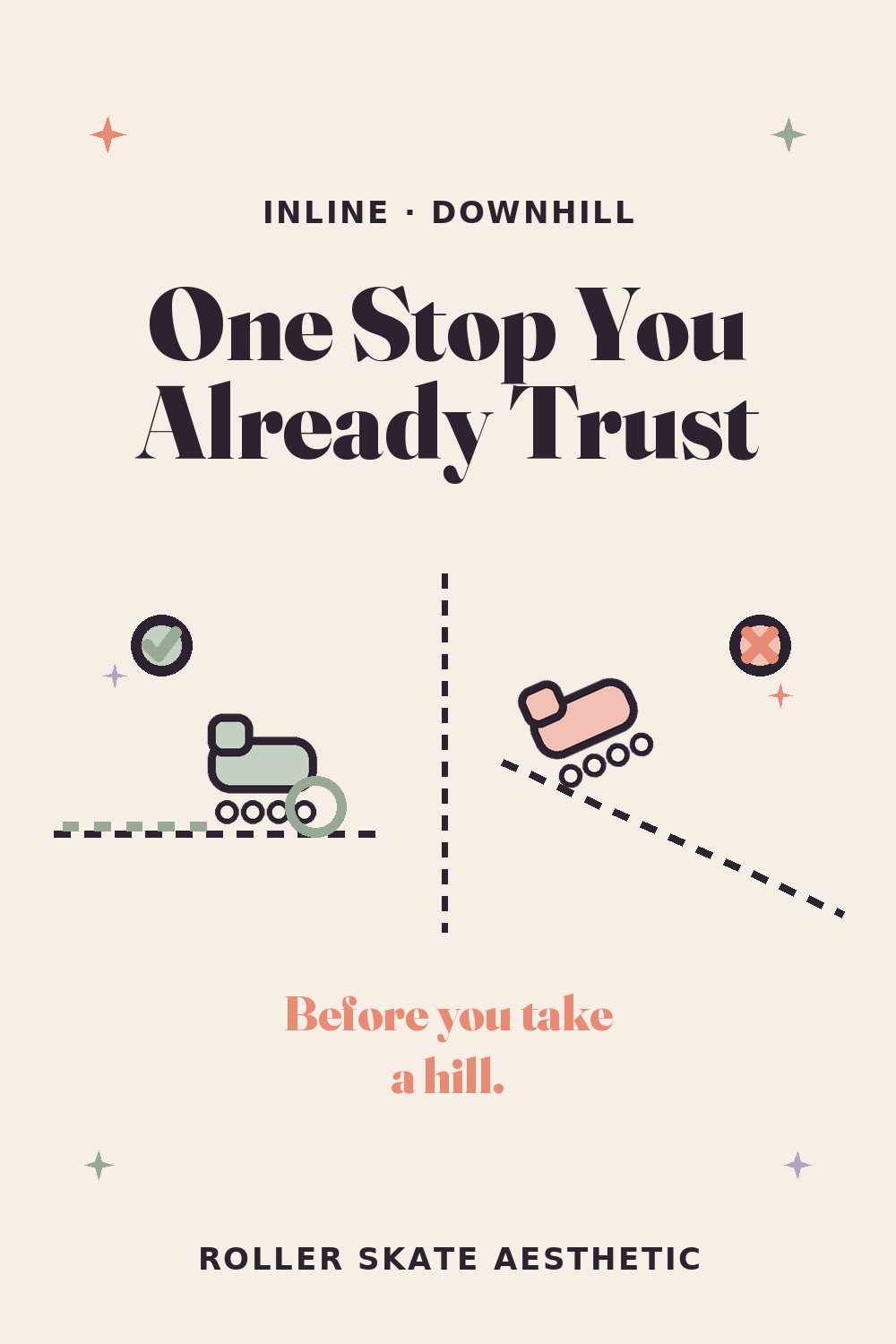
A certified coach's entry condition for slope practice is stricter than it sounds: at least one fluent stop on the flat that already stops you from your top speed. Not one you are learning — one you trust. Until then, stay on flat ground. And a hill I doubt I can stop on, I ride it out rather than brake — Cass. Technique from ICP-certified coach Asha Kirkby.
Most of what goes wrong on a hill was decided before the hill, at the moment someone rolled onto it. The entry condition matters more than the technique, and it is stricter than most people assume.
You need at least one fluent stop on the flat that already stops you from your highest speed. Not a stop you are working on. A stop you would bet on without thinking about it. Until you have that, slope practice is not training, it is exposure.
Stay on flat ground while you build it. That is the coach's advice and it is not a formality: a great many falls and accidents happen to skaters who could not stop on a slope, and nothing in skating is more worth the patience than this.
One stop is the minimum, not the target. A single method covers a single situation; the point of the first one is that it earns you the right to start learning the second on a gradient.
One thing sits above all of this, and it is mine rather than hers: a hill I doubt I can stop on, I ride it out rather than brake. Trying to brake halfway down a gradient you have already misjudged is worse than riding it to the flat — Cass, a non-professional street skater.
Technique from Asha Kirkby of Skatefresh, an instructor certified by the Inline Certification Program. She teaches inline skating, and that is the discipline this page is about.
Keep going: this is one section of the full Roller Skating for Beginners guide — sizing, gear, stopping, and where to skate, in one page. Free, no sign-up, nothing to buy.