Beginner roller skating
Quad Transitions Are Down, Up, Down With Your Knees
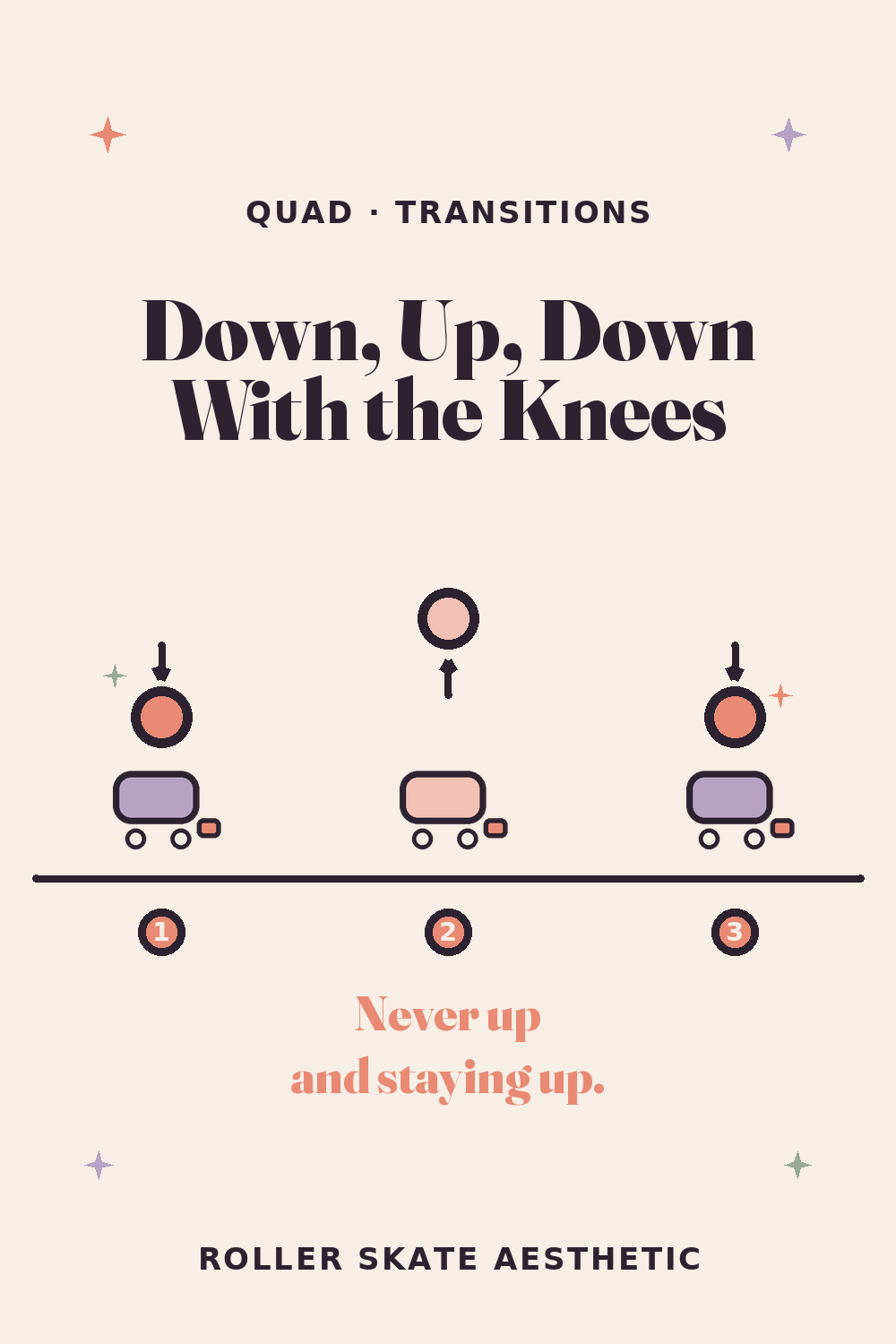
The flip on quads is quick and safe when the wheels you pivot on are unloaded. A certified coach shows a clear down-up-down of the knees: sink, rise just enough to release the heel or toe wheels, flip, and sink again. The fault to watch: coming up and staying up. Practise both sides for eventual fluency. Quad tutorial from ICP-certified coach Asha Kirkby.
A quad transition that feels slow and dangerous is usually one done with the legs at a single height. The wheels you are trying to pivot on are still loaded, so the flip drags, and dragging wheels are what catch.
A certified coach shows a clear down-up-down movement of the knees. Sink first. Rise just enough to release the pressure on the heel wheels or the toe wheels, whichever pair the flip pivots on. Flip. Then sink again into the backward scissor. Three beats, and the middle one is short.
The fault to watch for is coming up and staying up. The rise is a release, not a new position. A skater who stands tall to flip and stays tall afterwards has traded the safety of the bend for a moment of convenience, and is now rolling backwards on straight legs.
Practise both sides for eventual fluency. The coach is explicit that the point of the drill is both directions, not the comfortable one; the backwards-to-forwards version is the harder of the two and is the one that gets skipped.
Technique from Asha Kirkby of Skatefresh, an instructor certified by the Inline Certification Program who also teaches quad skating. This page is about QUAD skates, not inline skates: it comes from her quad tutorial, and the site's own skater does not practise quads, so nothing here is vouched for by her.
Keep going: this is one section of the full Roller Skating for Beginners guide — sizing, gear, stopping, and where to skate, in one page. Free, no sign-up, nothing to buy.