Beginner roller skating
Quads Steer Through the Trucks, So Outdoor Turns Are Whole-Body Moves
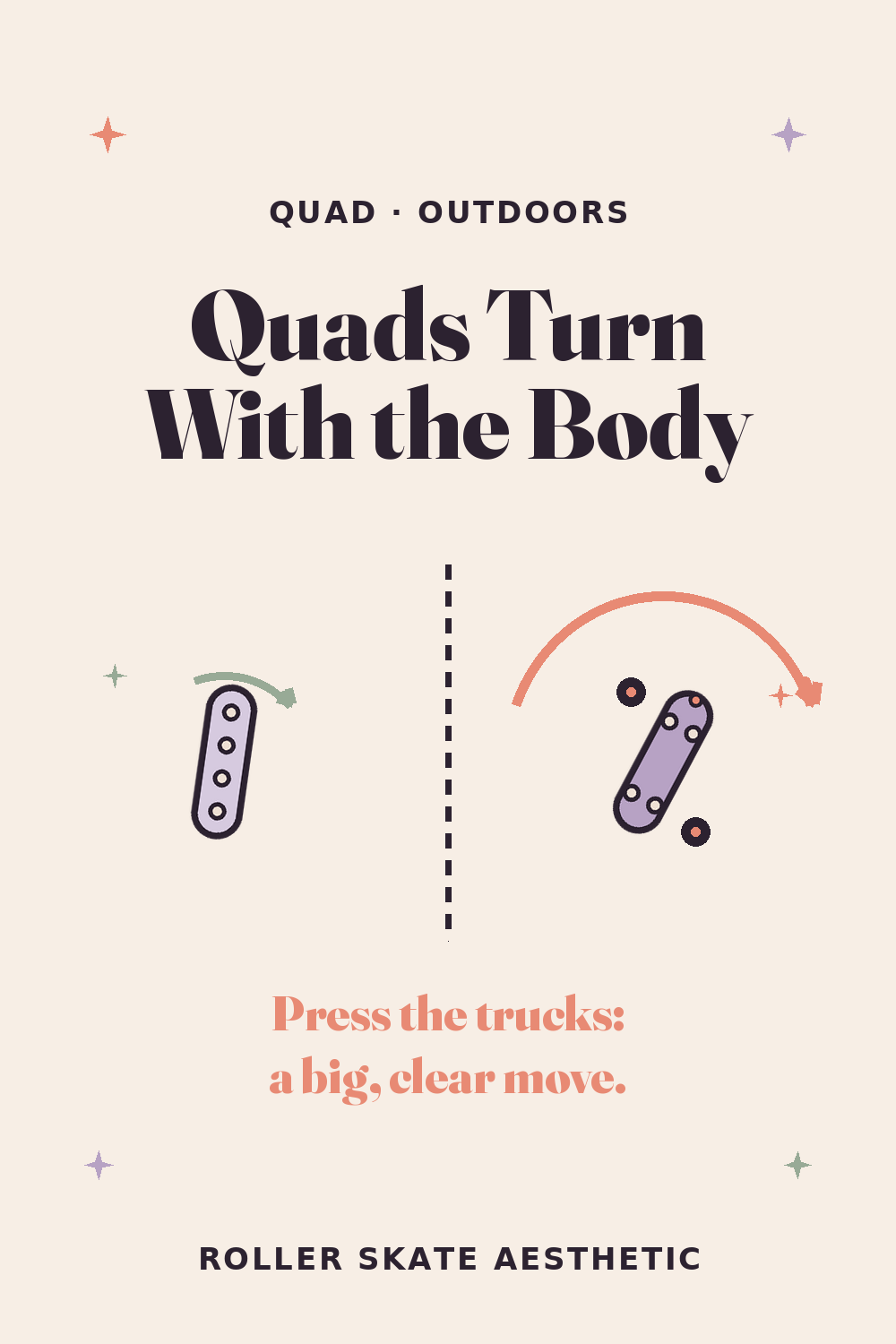
Inline skates turn on small edge changes. Quads turn by pressing into the trucks until they pivot, and a certified coach says that takes more pronounced knee and body movement. Outside, where a turn is often how you avoid a hole or a pedestrian, expect quad steering to be deliberate and big rather than subtle. Technique from ICP-certified coach Asha Kirkby.
Skaters coming from inline skates, or from watching them, expect a turn to be a small thing. On quads it is not, and a certified coach explains why the difference is in the hardware.
An inline skate turns on small edge changes. The wheels sit in one line, so leaning the leg a little tips the whole skate onto an edge and it carves. The movement can be subtle enough that an onlooker barely sees it.
A quad turns by pressing into the trucks until they pivot. The trucks are the two hinged axles under the boot. They do not steer on their own; they steer when the skater's weight presses one side of the plate down, and the coach's words are that this takes more pronounced knee and body movement. The whole leg leans, the knee drives, and the trucks answer.
Outside, a turn is often how you avoid a hole, a pedestrian or a patch of gravel, so expect quad steering to be deliberate and big rather than subtle. A half-hearted lean on quads produces a half-hearted turn, and outdoors that is a turn that arrives too late. Commit to the press, and the skate goes where the knees point.
Technique from Asha Kirkby of Skatefresh, an instructor certified by the Inline Certification Program who also teaches quad skating. This page is about QUAD skates outdoors: it comes from her comparison of quad and inline skates, and the site's own skater does not practise quads, so nothing here is vouched for by her.
Keep going: this is one section of the full Roller Skating for Beginners guide — sizing, gear, stopping, and where to skate, in one page. Free, no sign-up, nothing to buy.