Beginner roller skating
Rock Onto the Toe Stop to Hold Still, or to Turn Around It
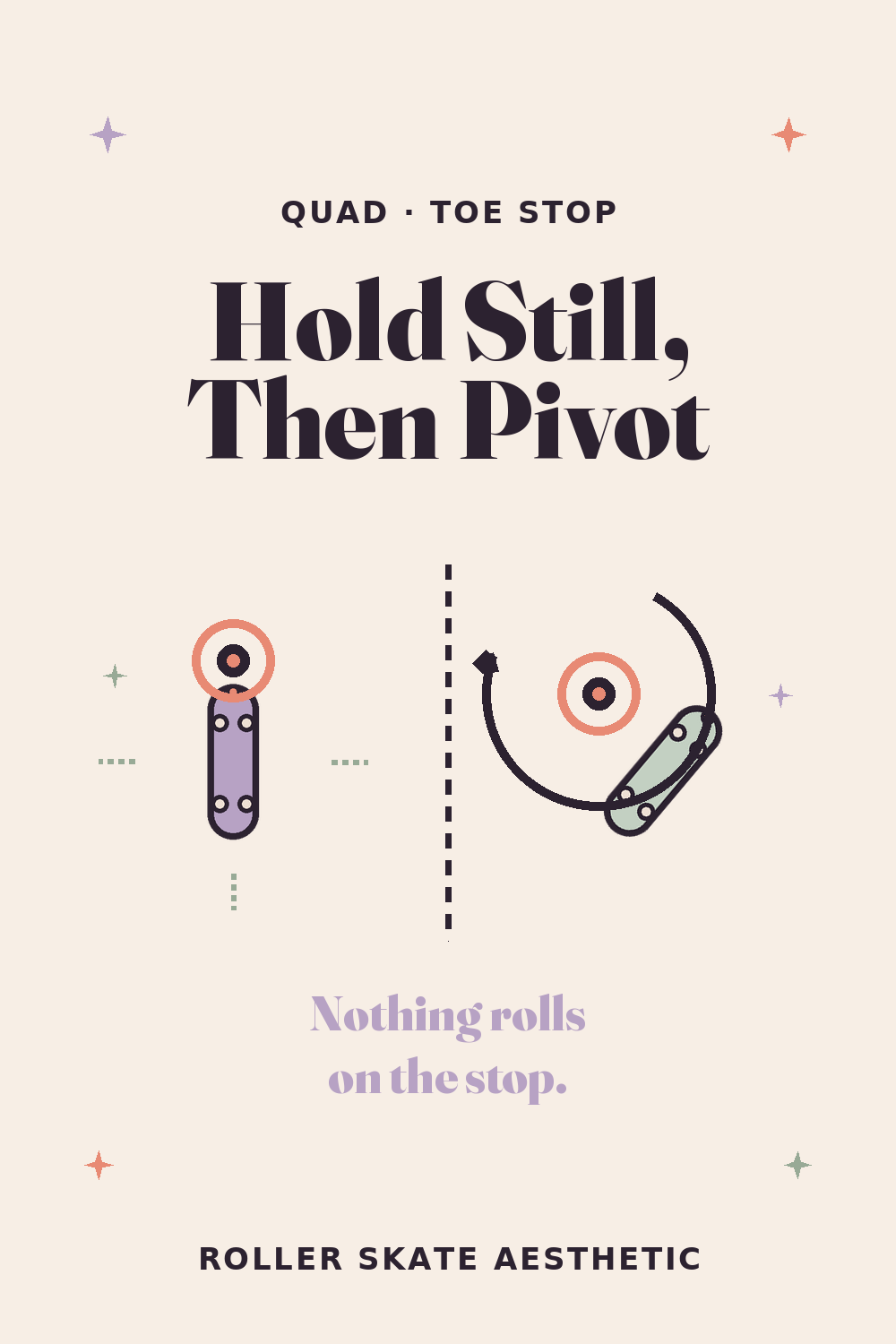
On quads, a skate rocked onto its toe stop is no longer rolling, so you stop drifting away while you stand. The skater behind this site, who learned on quads, names two uses of that stillness: stabilising yourself, and pivoting — on a ramp you wedge on the stop and turn your half-turns around that fixed point. An anchor first, an axis second; never a way of slowing down.
A skater on quads who wants to stand still on a rink has a problem: eight wheels that want to roll. Lock the knees, hold the breath, and the skates still creep.
The skater behind this site, who learned on quads, names the fix: rock onto the front stop. The skate that is on its stop is no longer rolling, so it no longer drifts away under you. That is the first use of the fixed point — stabilising yourself.
The second use is the same fact seen while moving: a point that does not roll is an axis. On a ramp, you wedge on the stop and turn your half-turns around it. The stop stays where it is planted; the rest of you swings round it.
An anchor first, an axis second — and never a way of slowing down. Both uses come from the same mechanism described on the previous page: lean onto the stop, the wheels leave the floor, and that skate is placed rather than rolling. Everything the stop is good for follows from there.
From the notes of the skater behind this site, who learned on quads and now skates inline. This page is about QUAD skates: the toe stop it describes sits at the front of a quad skate, and nothing here transfers to the brake at the back of an inline skate.
Keep going: this is one section of the full Roller Skating for Beginners guide — sizing, gear, stopping, and where to skate, in one page. Free, no sign-up, nothing to buy.