Beginner roller skating
Going Through the Motions Is Not Stopping
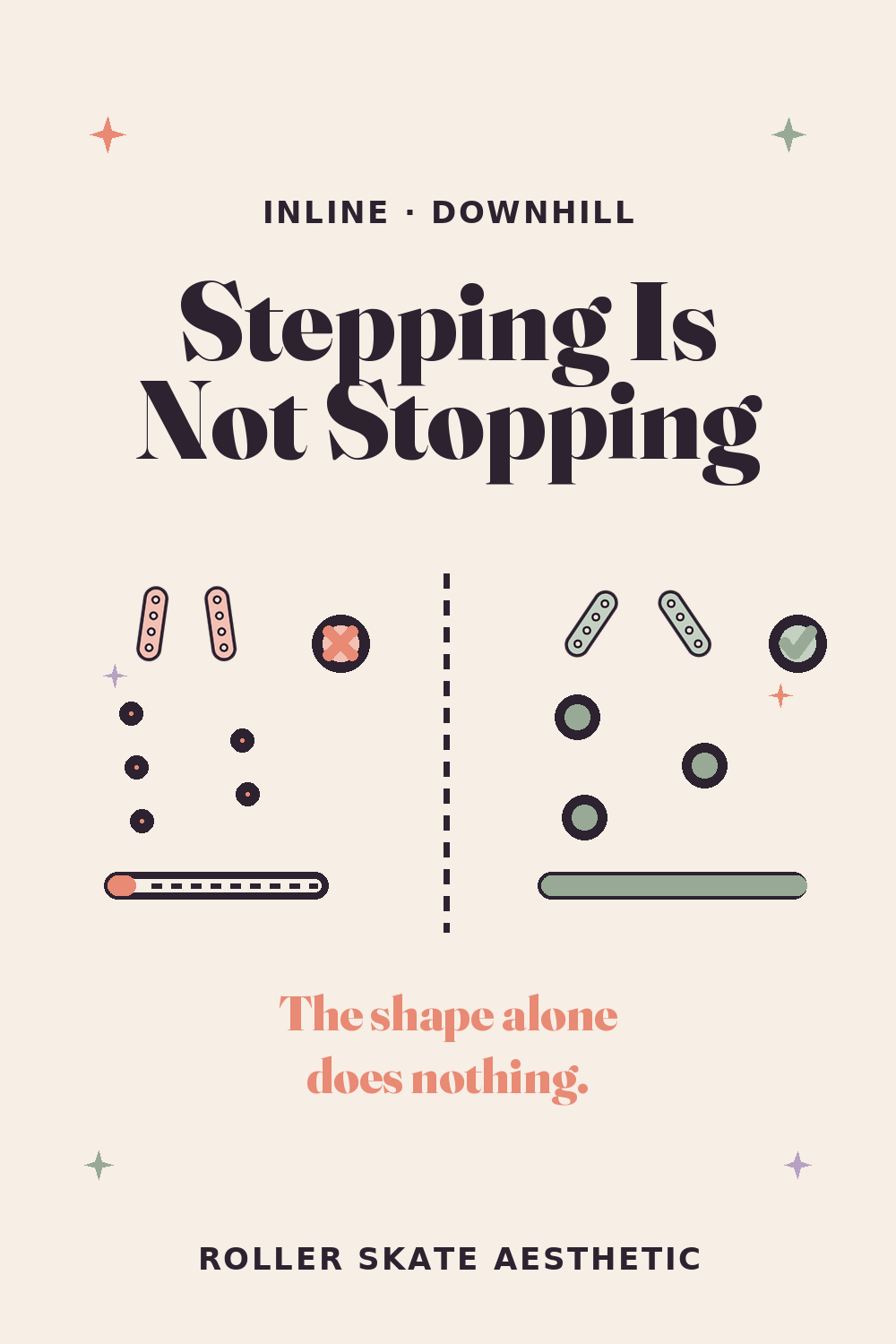
Filmed on a real slope, a student stepped correctly the whole way down and never slowed. That is the trap of the stepping plough: the shape of the movement is easy, and the shape alone brakes nothing. Speed comes off two ways only — knees deep enough to load the edges, and toes turning further in at each step. Past my stops, I ride it out — Cass. From ICP-certified coach Asha Kirkby.
This is the trap of the stepping plough, and the reason it frustrates people more than harder stops do: the shape of the movement is easy, and the shape alone brakes nothing.
A student filmed on a real slope stepped correctly the whole way down and never slowed. Nothing about the footwork looked wrong. She was going through the motions, and the motions are not the mechanism.
Speed comes off two ways only. Knees deep enough to load the edges, and toes turning further in at each step. Those are the two things that convert a step into braking; everything else is choreography.
More steps is not more braking. Raising your cadence at the end of a stop helps — but only once the angle and the bend are there. Without them, faster stepping is just walking downhill at speed.
One thing sits above all of this, and it is mine rather than hers: a hill I doubt I can stop on, I ride it out rather than brake. Trying to brake halfway down a gradient you have already misjudged is worse than riding it to the flat — Cass, a non-professional street skater.
Technique from Asha Kirkby of Skatefresh, an instructor certified by the Inline Certification Program. She teaches inline skating, and that is the discipline this page is about.
Keep going: this is one section of the full Roller Skating for Beginners guide — sizing, gear, stopping, and where to skate, in one page. Free, no sign-up, nothing to buy.