Beginner roller skating
The T-Stop Is a Slow-Down, Not an Emergency Stop
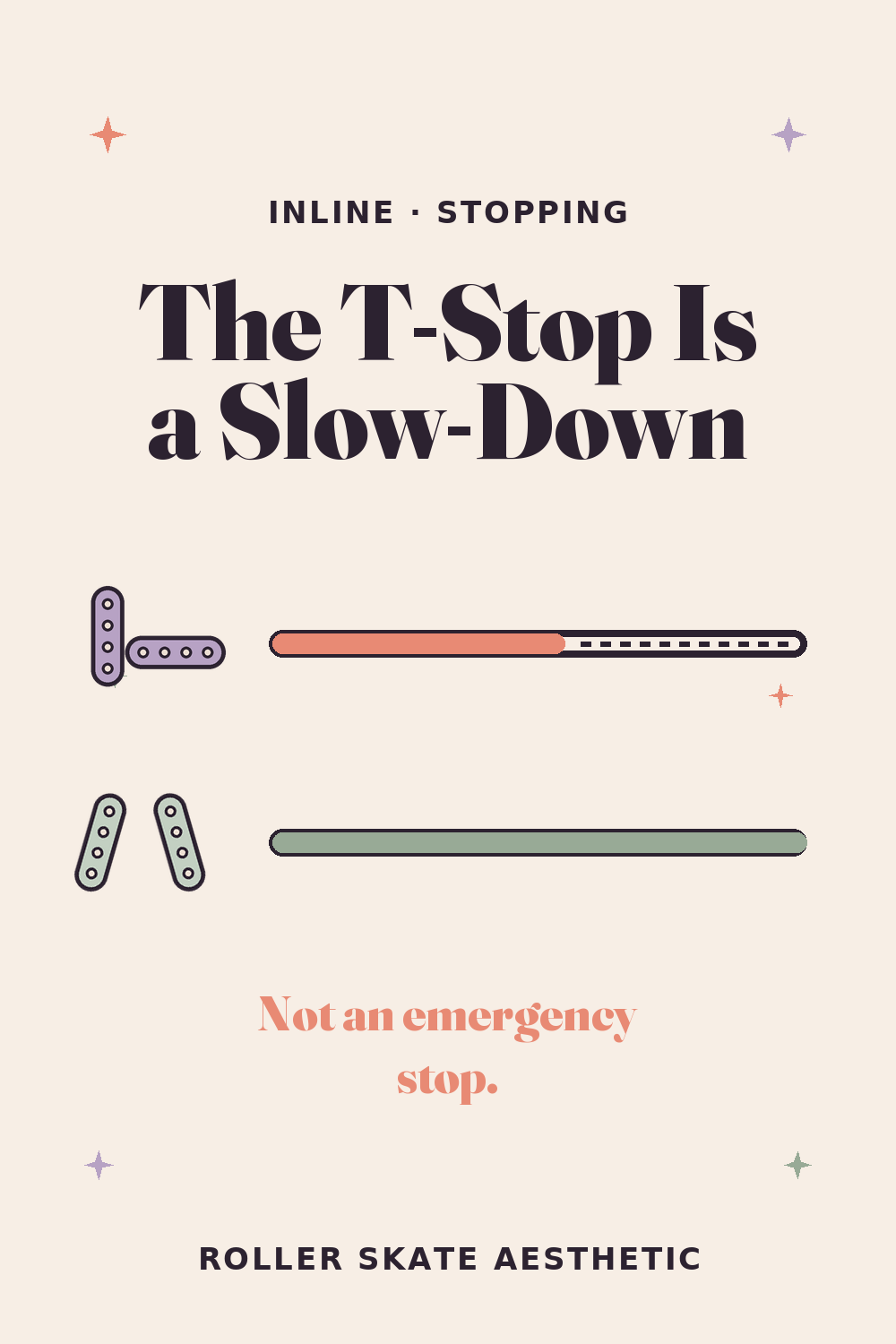
I stop in a T myself, and I'll pass this on anyway: a certified coach calls the T-stop an intermediate deceleration method, not an emergency stop — and most beginners rely on it alone. Without a heel brake, you need more than one way to stop. Her pick is the stepping plough: faster deceleration, a true full stop, endless combinations, even with the T-stop. Technique from ICP-certified coach Asha Kirkby; note from me, Cass, a non-professional street skater.
Plenty of skaters, myself included, end up with the T-stop as their only stop. It is worth knowing what it is actually rated for before you find out on a hill.
A certified coach classes it as an intermediate deceleration method, not an emergency stop. That is not a criticism of the move — it is a statement about what it can absorb and how long it takes, and most beginners rely on it alone.
If your skates came without a heel brake, or you took yours off, you need more than one way to stop. I took mine off once I was comfortable, because it got in the way when I crossed one foot over the other in turns — so this applies to me as much as to anyone reading it.
Her pick for a second stop is the stepping plough: faster deceleration than a T-stop, a true full stop rather than a slow fade, and it combines with almost everything else, the T-stop included.
Technique from Asha Kirkby of Skatefresh, an instructor certified by the Inline Certification Program. She teaches inline skating, and that is the discipline this page is about. Personal account from Cass, a non-professional street skater — not a coach, and this page does not pretend otherwise.
Keep going: this is one section of the full Roller Skating for Beginners guide — sizing, gear, stopping, and where to skate, in one page. Free, no sign-up, nothing to buy.