Beginner roller skating
The Lunge Turn Is Intermediate, the Barrel Roll Is Advanced
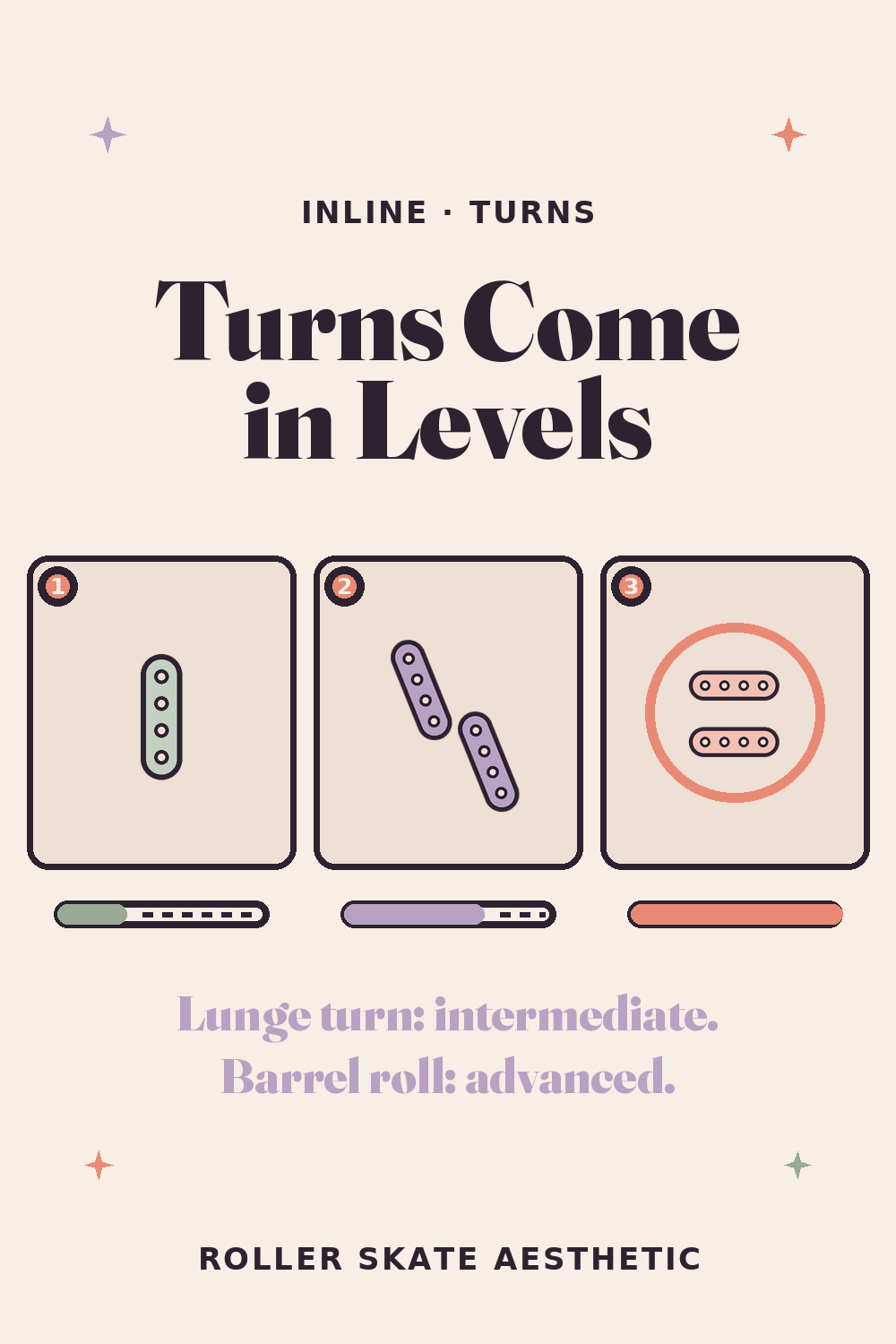
Turns come in levels, and ICP-certified coach Asha Kirkby's own inline curriculum draws the lines. Beginners work on static preparation, basic movement and the basic stride. The lunge turn is the intermediate course. The barrel roll, a chain of transitions, sits at advanced level with the double push. Knowing where a turn lives tells you what to learn before it.
Turns have levels, and it helps to know which level a turn belongs to before spending an afternoon failing at it. A certified coach's own inline curriculum draws the lines.
Beginner level is static preparation, basic movement and the basic stride. No named turn lives there. The beginner's job is to roll, to stop and to steer wide, and this site has covered that ground.
The lunge turn is the intermediate course, next to the fitness stride. It is the first turn the coach gives a name and a course of its own, and this site has already said not to skip it: the lunge turn and the lunge stop are the door to the sliding stops that come later.
The barrel roll, a chain of transitions, sits at advanced level with the double push. It is three moves stitched together, and it belongs after the transitions themselves are solid on both sides. Knowing where a turn lives tells you what to learn before it, and stops you from blaming yourself for a move that is two levels away.
Technique from Asha Kirkby of Skatefresh, an instructor certified by the Inline Certification Program. She teaches inline skating, and that is the discipline this page is about.
Keep going: this is one section of the full Roller Skating for Beginners guide — sizing, gear, stopping, and where to skate, in one page. Free, no sign-up, nothing to buy.