Beginner roller skating
The Turn Is in Your Upper Body, Not Your Skates
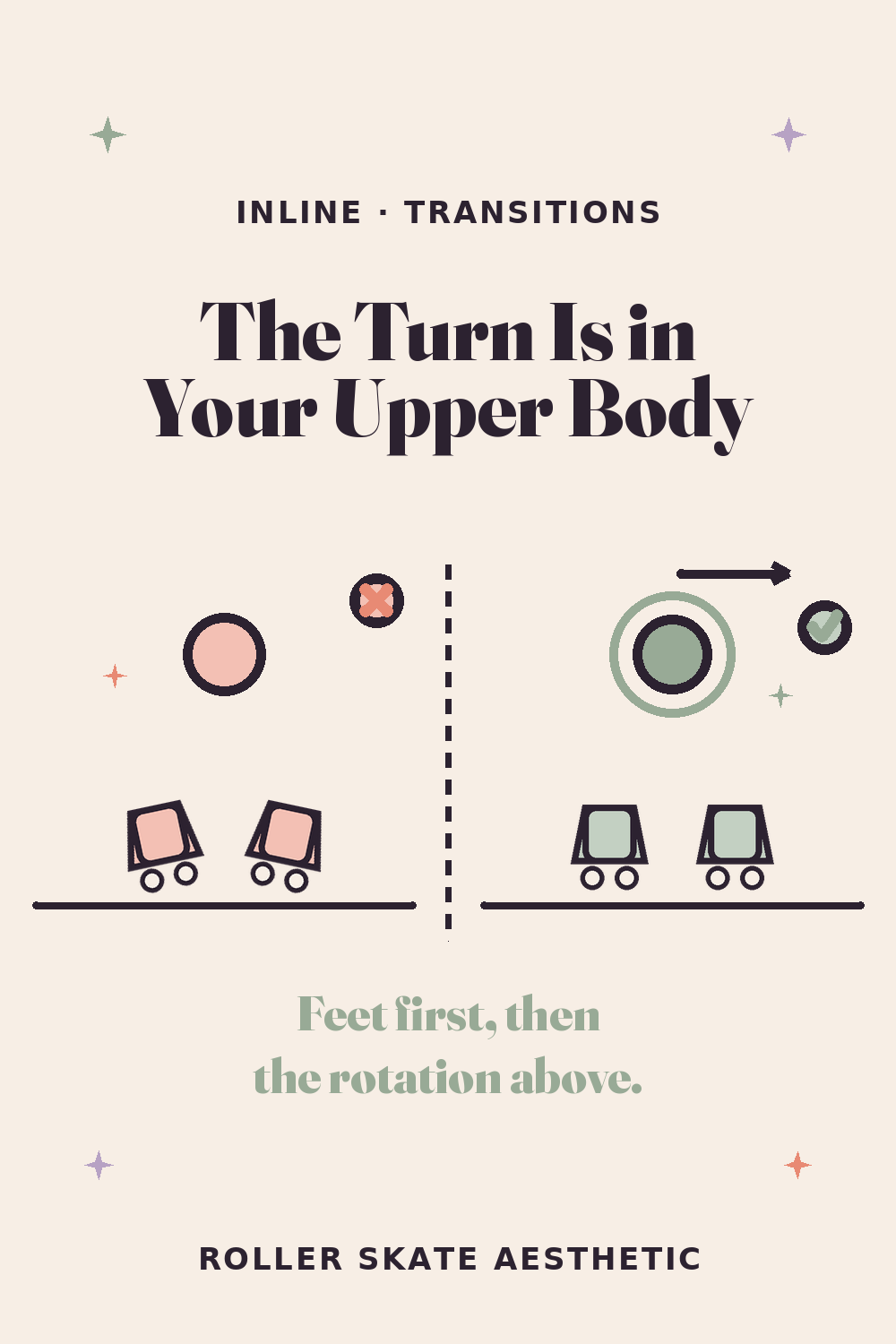
Skaters learning a turn focus on their skates and what the feet are doing, and ICP-certified coach Asha Kirkby says that is right while you learn. But fluidity comes only when the upper body is integrated into the movement and the rotation is correct and sufficient. When a three turn or a transition stays jerky on inline skates, the missing piece is usually above the skates.
Skaters learning a turn look down. They focus on their skates and on what the feet are doing, and a certified coach says that focus is right while you learn. It is also where the learning stops.
Fluidity comes only when the upper body is integrated into the movement and the rotation is correct and sufficient. That is her verdict on a skater's three turns: the feet were doing the move, and the move was still not flowing, because the shoulders and torso were not turning with it, or not turning enough.
Rotation is a whole-body event. A transition or a three turn that stays jerky on inline skates is usually short of rotation above the hips: the skates are asked to turn the body instead of following it, and they do it in steps.
So when a turn is technically correct and still looks stiff, the missing piece is usually above the skates. Film yourself from the side, as this site has suggested before, and watch the shoulders rather than the feet.
Technique from Asha Kirkby of Skatefresh, an instructor certified by the Inline Certification Program. She teaches inline skating, and that is the discipline this page is about.
Keep going: this is one section of the full Roller Skating for Beginners guide — sizing, gear, stopping, and where to skate, in one page. Free, no sign-up, nothing to buy.