Beginner roller skating
Tram Lines: Going Slow Is What Gets Your Wheels Caught
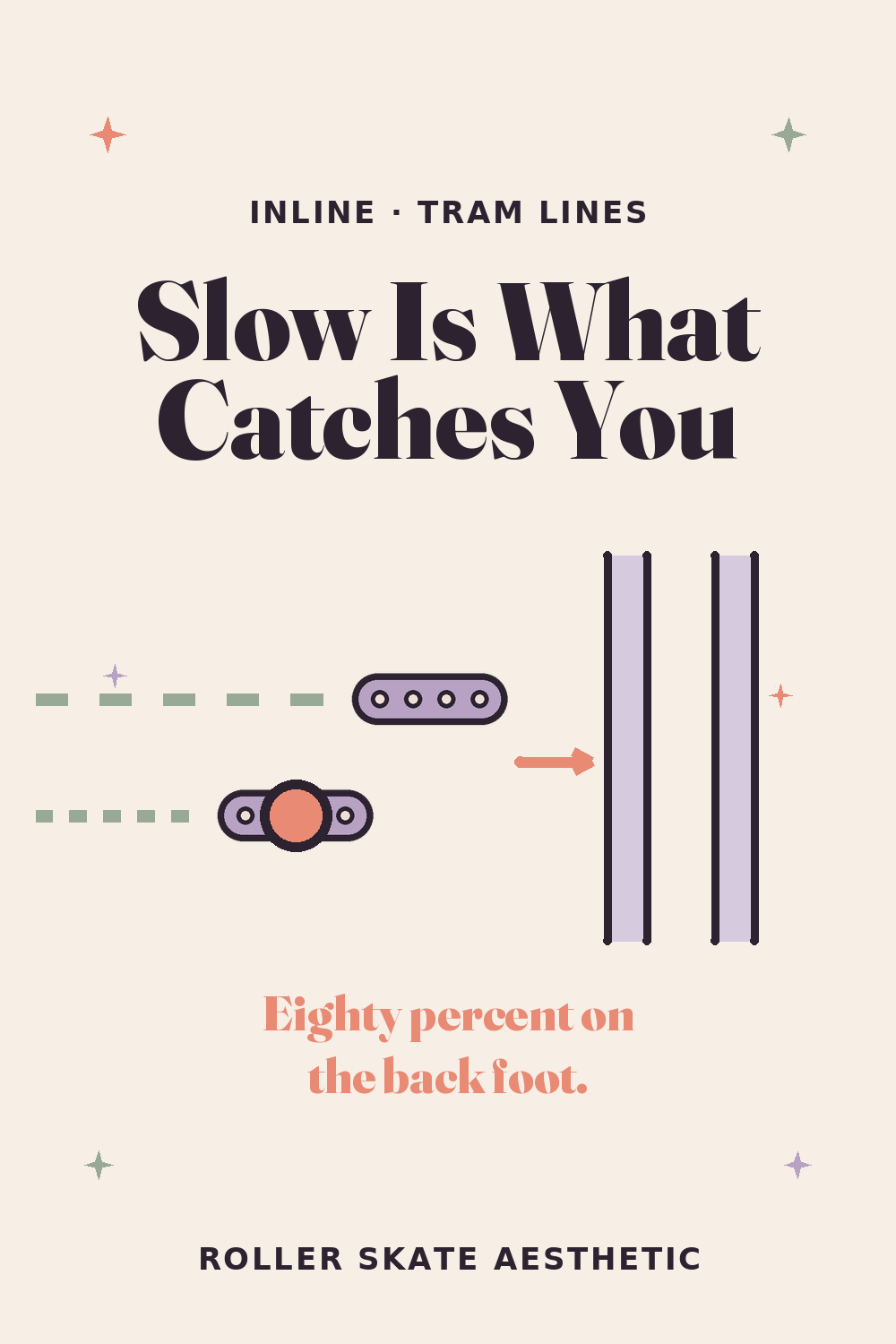
The beginner's instinct at a tram rail is to slow down, and that is the move that puts a wheel in the gap. A certified coach's first method is a narrow scissor stance with most of your weight — about eighty percent — on the back foot, and speed kept up. Speed is your best friend here: a slow wheel has time to find the rail. Filmed with a street skater in Amsterdam. Technique from ICP-certified coach Asha Kirkby.
Tram lines are one of the trickiest and most intimidating obstacles a city puts in front of a skater, and the instinct they trigger is exactly wrong. You see the rail, you slow down, and the slow wheel is the one that finds the gap.
The beginner's first method is a narrow scissor stance with about eighty percent of your weight on the back foot, and your speed kept up. One skate ahead of the other, the back one carrying you, so that the front skate meets the rail light and rolls over it rather than dropping in.
Speed is your best friend here. A wheel crossing a gap quickly does not have time to settle into it; a wheel creeping across does. That is the whole reason the coach's first instruction is not "be careful" but "keep going".
This was filmed in Amsterdam with a street skater from a local shop, which is worth saying because it means the methods were demonstrated on real rails in real traffic, not on a marked-out floor.
Technique from Asha Kirkby of Skatefresh, an instructor certified by the Inline Certification Program. She teaches inline skating, and that is the discipline this page is about.
Keep going: this is one section of the full Roller Skating for Beginners guide — sizing, gear, stopping, and where to skate, in one page. Free, no sign-up, nothing to buy.