Beginner roller skating
You Pop Up Straight Right After Every Push
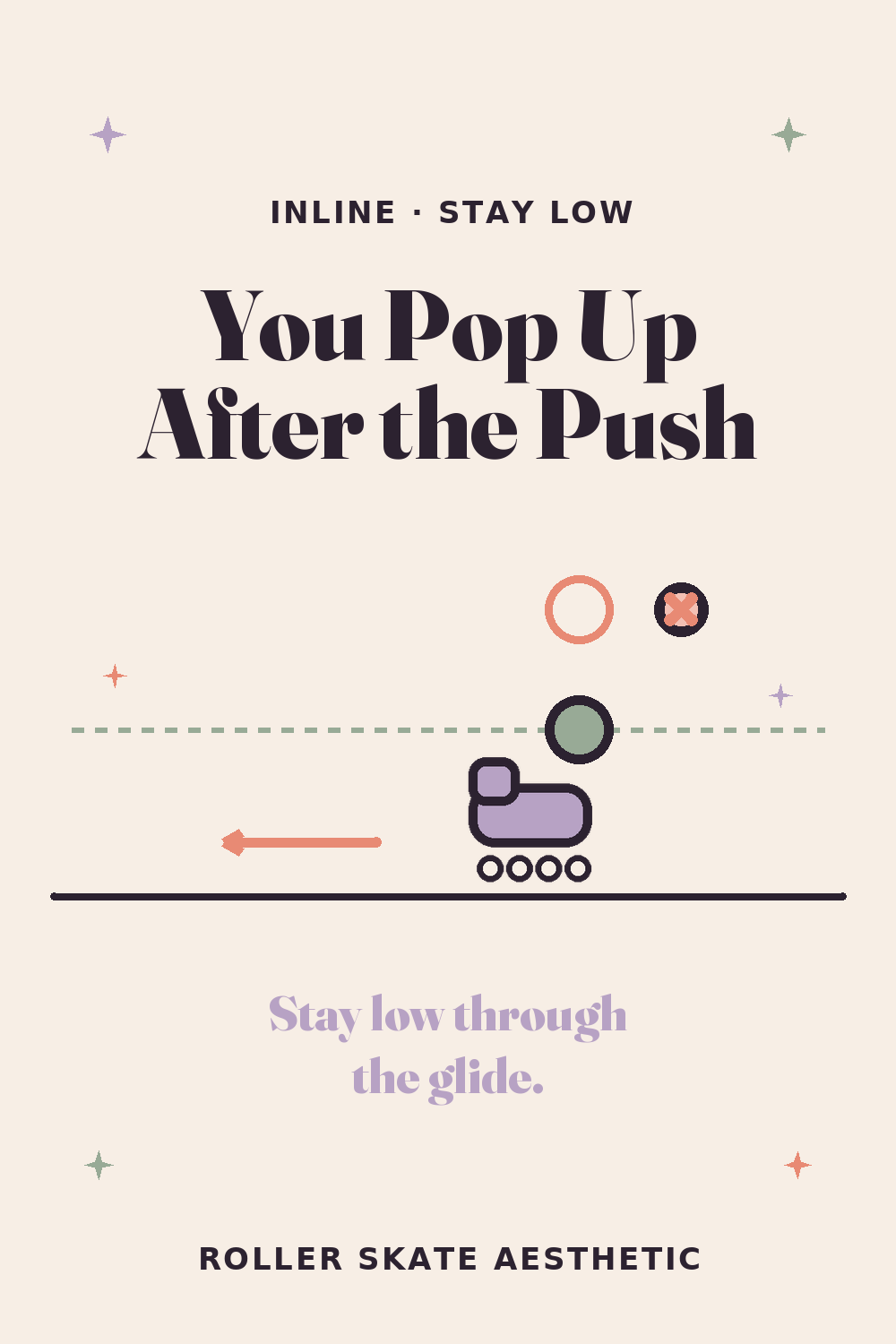
Straight knees lock your posture, make you unstable, roll your skates onto the inside edge and set up the backward fall. A certified coach names the moment beginners straighten: right after a push, or during the regroup. Stay continuously low through stride, push and glide — shins into the boot tongue, knees over your toes. Technique from ICP-certified coach Asha Kirkby.
Straight knees are the most expensive habit a beginner has. They lock the posture, they make you unstable, they roll the skates onto their inside edges, and they put the weight where the backward fall starts. Everybody has been told to bend. Almost nobody knows when they stop bending.
A certified coach names the exact moment: right after a push, or during the regroup. The knees are bent for the push itself, the leg extends, and as it comes back under the body the skater stands up with it — as if the push were finished and the bend could be put away.
Stay continuously low through the stride, the push and the glide. Shins pressed forward into the tongue of the boot, knees flexed directly over the toes, and that shape held while the leg goes out, while it comes back, and while you roll. Bent knees drop your centre of gravity and absorb whatever bump the ground has waiting; straight ones hand it to you whole.
The site has said before that standing tall puts your weight behind the wheels. This is the same fact seen from the other end: it is not that beginners forget to bend, it is that they bend, push, and then quietly straighten at the one moment the balance needed them most.
Technique from Asha Kirkby of Skatefresh, an instructor certified by the Inline Certification Program. She teaches inline skating, and that is the discipline this page is about.
Keep going: this is one section of the full Roller Skating for Beginners guide — sizing, gear, stopping, and where to skate, in one page. Free, no sign-up, nothing to buy.