Beginner roller skating
Your Head Is Ready Before Your Body Is
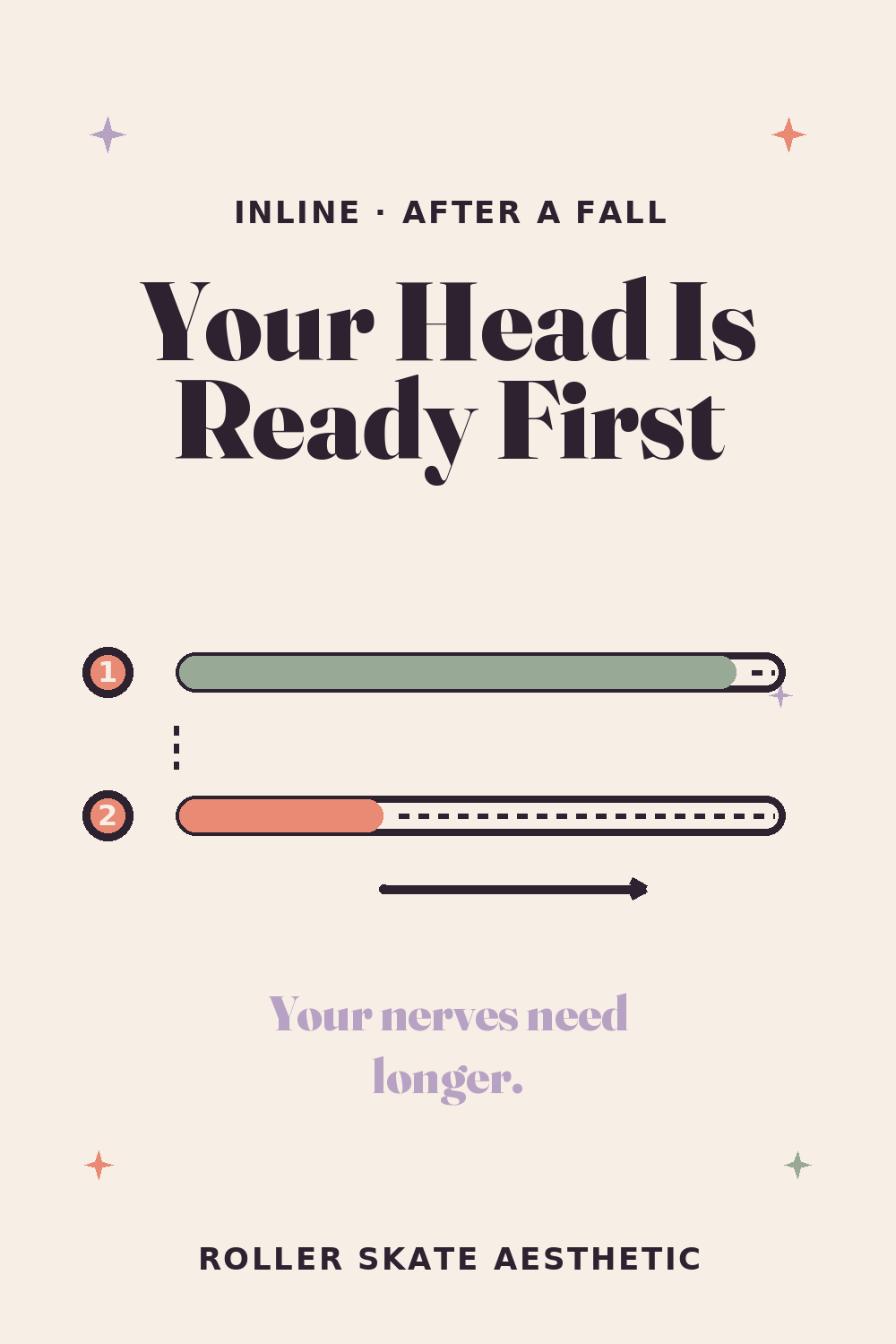
Coming back after a fall, the split is normal: your mind is excited to skate again while your body still remembers the impact, and hesitation is a completely natural reaction. A certified coach's advice is to stop comparing yourself to how you skated before. Muscle memory comes back fast. What needs time is the nervous system reconvincing itself that rolling on wheels is safe. From ICP-certified coach Asha Kirkby.
Coming back after a fall or an injury splits you in two, and the split is the normal part. Your mind is excited to skate again. Your body still remembers the impact.
Hesitation is a completely natural reaction to that, and it is not the same thing as having lost your nerve. Reading it as cowardice is the mistake that makes people rush, and rushing is what produces the second fall.
Stop comparing yourself to how you skated before. That comparison is the source of nearly all the pressure, and it measures you against someone who had not yet had the accident.
Muscle memory comes back fast. The nervous system is the slow part. It has to reconvince itself that rolling on wheels is safe, and it does that through uneventful repetition rather than through being talked round.
Technique from Asha Kirkby of Skatefresh, an instructor certified by the Inline Certification Program. She teaches inline skating, and that is the discipline this page is about.
Keep going: this is one section of the full Roller Skating for Beginners guide — sizing, gear, stopping, and where to skate, in one page. Free, no sign-up, nothing to buy.