Beginner roller skating
Your Edges Collapse When You Tire
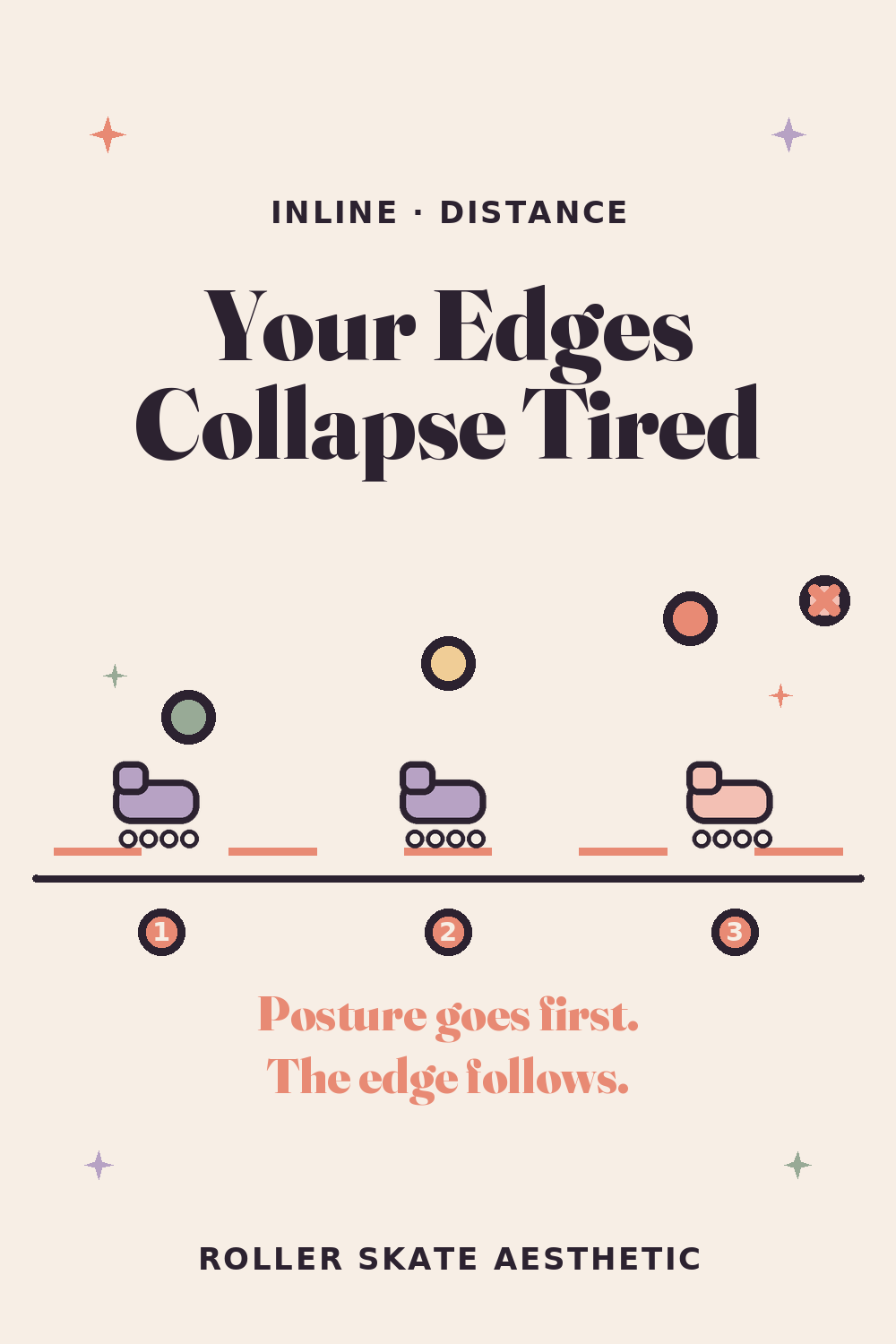
Edges that are clean at the start of a long skate are not clean at the end. ICP-certified coach Asha Kirkby names the chain: as the legs tire, the knee bend gets shallow, the weight drifts back, and the skate tips onto its inside edge, pronation arriving with fatigue rather than habit. The posture goes first; the edge follows it down.
The edges you have at the start of a long skate are not the edges you have at the end. This is not a matter of concentration. It is a chain, and a certified coach lays it out in order.
As the legs tire, the knee bend gets shallow. Nobody decides to straighten up; the muscles that hold a deep bend simply run out, and the body drifts towards the position that costs least, which is upright.
With the knees straighter, the weight drifts back. With the weight back, the skate tips onto its inside edge. That is pronation — the same fault the beginner has by habit — arriving in a competent skater by fatigue instead. The posture goes first, and the edge follows it down.
Knowing the order is what makes it fixable on the road. The edge is the last link, so correcting the edge directly does nothing; the first link is the knee bend, and that is where the next pages go.
Technique from Asha Kirkby of Skatefresh, an instructor certified by the Inline Certification Program. She teaches inline skating, and that is the discipline this page is about.
Keep going: this is one section of the full Roller Skating for Beginners guide — sizing, gear, stopping, and where to skate, in one page. Free, no sign-up, nothing to buy.