Beginner roller skating
Your Strong-Side Transition Still Hesitates at Speed
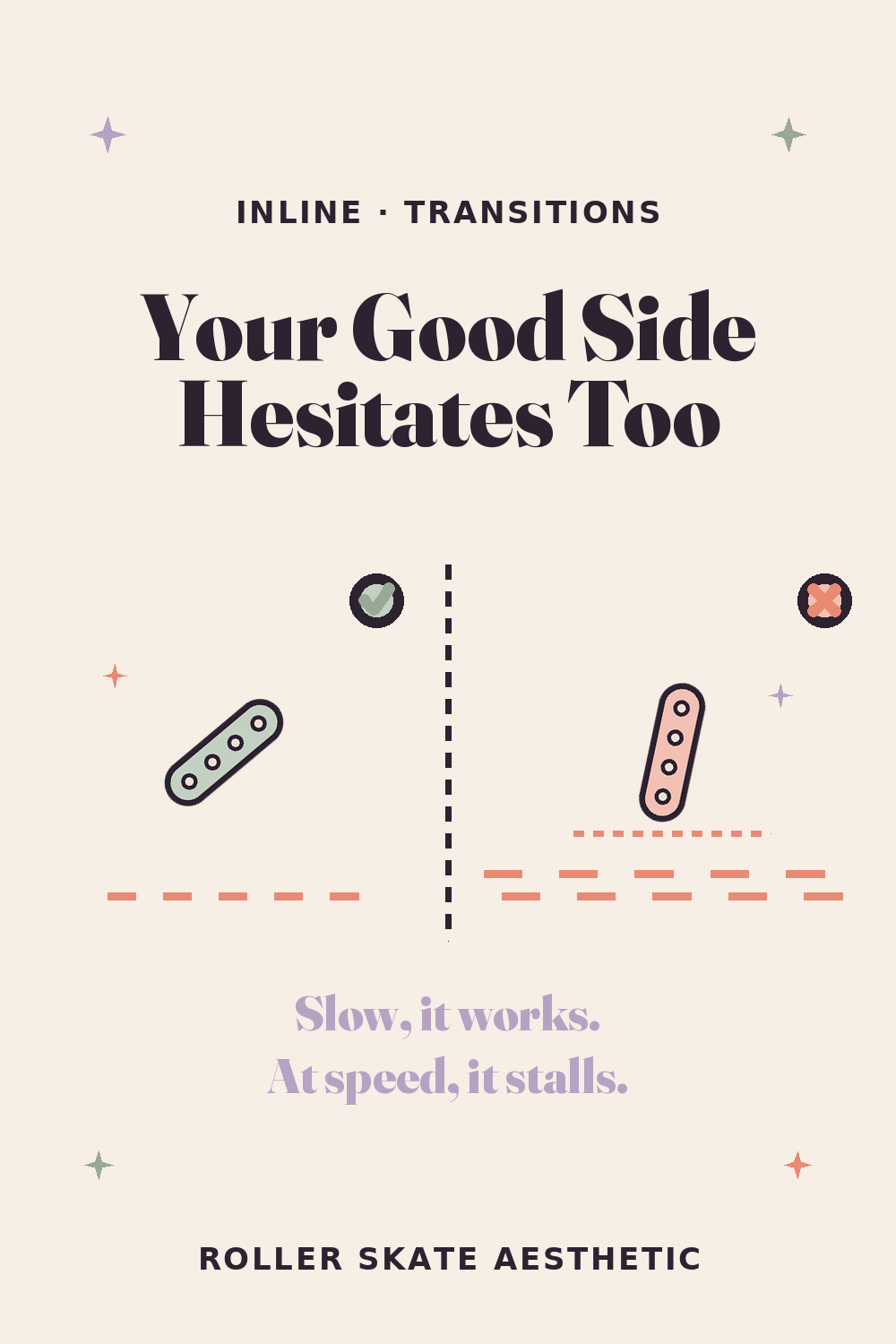
Even on the good side, transitions disappoint, says ICP-certified coach Asha Kirkby. The move is not faster than it was, and at higher speed hesitation creeps in, or stumbles and falls. A transition that works at a slow roll is not yet a transition you own on inline skates. Speed is the test the strong side fails too, and her tips for the weaker side apply to the whole skill.
Most skaters expect the weaker side to be the problem with transitions. A certified coach points out that the strong side disappoints too, and names how.
The move is not faster than it was. Even on the good side, many skaters find that months of practice have not made the transition any quicker; it still takes the same deliberate moment it took at the start.
At higher speed, hesitation creeps in, or stumbles and falls. The transition that works at a slow roll is not yet a transition you own: speed is the test, and the strong side fails it as well, just later than the weak one.
Her tips for the weaker side apply to the whole skill. The coach's answer to the skater asking about his weak side is a set of top tips, and they are not weak-side tips; they are transition tips. Whatever is missing on the side that does not work is usually thin on the side that seems to.
Technique from Asha Kirkby of Skatefresh, an instructor certified by the Inline Certification Program. She teaches inline skating, and that is the discipline this page is about.
Keep going: this is one section of the full Roller Skating for Beginners guide — sizing, gear, stopping, and where to skate, in one page. Free, no sign-up, nothing to buy.